Choosing The Right Bluetooth Stethoscope For Your Practice In 2026

Introduction
Bluetooth stethoscopes are transforming the way doctors examine patients. Offering clearer sound and seamless digital integration, these smart devices make screening safer, faster, and more accurate. With the right tools, physicians can examine patients from a safe distance without compromising diagnostic accuracy.
This blog will explore the key features, clinical benefits, and practical considerations to help doctors and clinic owners choose the best Bluetooth stethoscope for their practice in 2026.
Understanding Bluetooth Stethoscopes in Clinical Practice
What Is a Bluetooth Stethoscope?
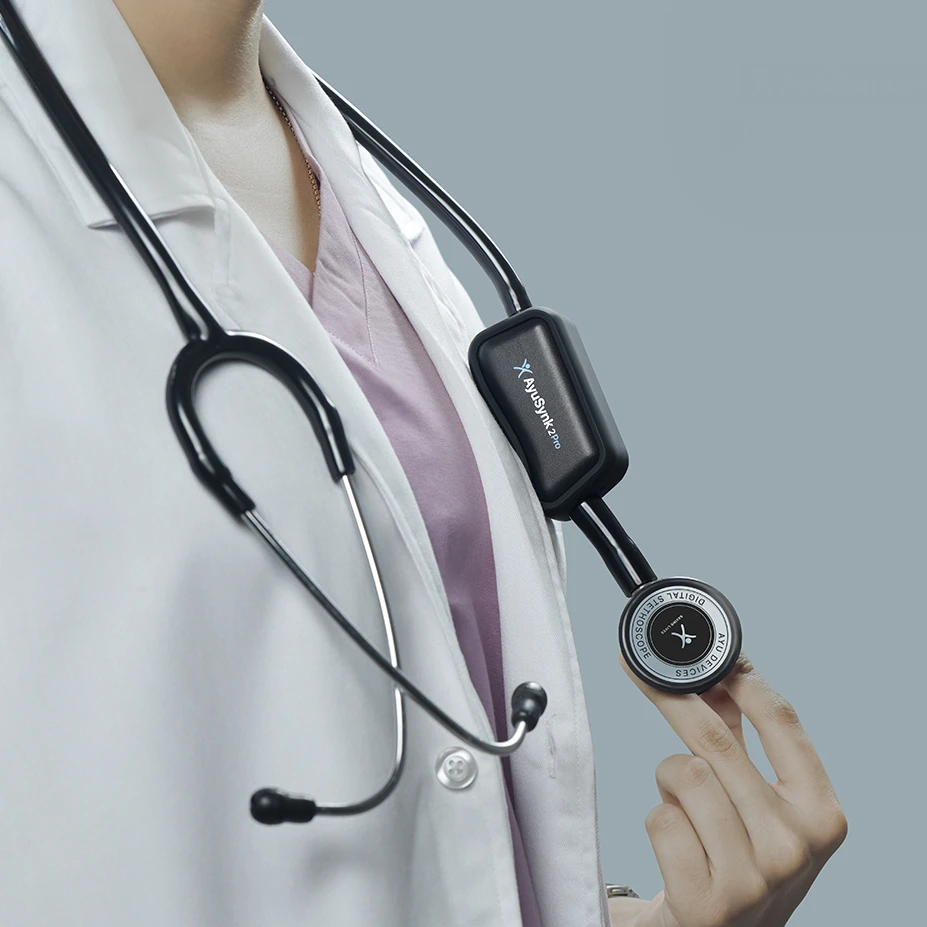
A Bluetooth stethoscope is a digital auscultation tool that uses Bluetooth technology to send heart and lung sounds to a connected device such as a smartphone or tablet. It enables medical professionals to:
- Maintain a safe physical distance while listening to patients’ heart and lung sounds.
- Record captured sounds can be reviewed later for better clinical understanding and follow-up.
- Encourage clinical judgment without taking the place of the physician’s expertise.
Distant Auscultation vs Remote (Tele) Auscultation
It’s important to distinguish between two forms of modern auscultation:
Distant Auscultation:
- Uses Bluetooth technology
- Safe-distance auscultation within the clinic (less than 10 meters)
- Physician remains physically present with the patient
Remote Auscultation (Tele-Auscultation):
- Uses internet and cloud platforms through apps such as AyuShare.
- Enables examination over long distances
- Supports consultations with specialists located at other facilities
Clinical Scenarios Where Bluetooth Stethoscopes Add Value
Pediatric Care and Fussy Children
Children often feel anxious during physical evaluation. Bluetooth stethoscopes allow them to stay close to their parents, reducing stress and improving cooperation.
Severely Injured Patients and Open Wounds
Examinations of patients with severe injuries or open wounds can be uncomfortable and potentially unsafe. Distant auscultation allows doctors to maintain hygiene and reduce patient discomfort.
Infectious Diseases and Airborne Conditions
For conditions like tuberculosis (TB), COVID-19, or other airborne infections, Bluetooth stethoscopes help clinicians perform auscultation safely, minimizing exposure while maintaining clinical effectiveness.
Pandemic and Outbreak Preparedness
These devices are valuable during pandemic scenarios, ensuring continuity of care without compromising the safety of patients or healthcare staff.
Different clinical needs require different auscultation approaches
Key Features to Evaluate in a Bluetooth Stethoscope
Audio Quality and Noise Suppression
Devices like the AyuSynk 2 Pro Lite combine strong sound amplification (up to 60X) with noise reduction and dedicated heart and lung filters, helping clinicians hear body sounds more clearly and make confident clinical decisions.
Recording, Reports, and Phonocardiograms
Modern devices allow clinicians to capture auscultation sounds, generate phonocardiograms, and create structured reports. This helps with peer review, teaching, and integration into electronic medical records (EMRs).
Waveforms and Interpretation Limitations
While waveforms provide visual support, they may not match textbook diagrams. Post-processed data is easier to interpret than live waveforms and should complement, not replace, auditory assessment.
Data Management and Clinical Collaboration
Secure Storage and Sharing
Captured sounds are stored securely in connected applications or systems, allowing clinicians to review and share them when needed. This supports collaborative consultations and care.
Bluetooth is used only to transfer body sounds from the stethoscope to a nearby device in real time, while internet connectivity is used to share recordings with doctors in different locations.
Integration with EMRs
Many devices integrate directly with EMRs, enhancing documentation, continuity of care, and clinical audits.
Safety, Responsibility, and Adoption Considerations
Even when using Bluetooth stethoscopes for distant auscultation, the physician’s presence remains essential to ensure accurate assessment. These devices also help maintain hygiene and safety, especially in high-risk situations, while serving as a supportive tool that enhances – but never replaces – clinical judgment.
Pricing and Value Considerations
Premium Features and Affordable Positioning
Modern Bluetooth stethoscopes come with features like noise suppression, sound processing, and phonogram generation, all of which help clinicians make more accurate assessments. While these devices cost slightly higher, their durability and advanced capabilities offer long-term value compared with basic or low-cost alternatives.
Long-Term Clinical Value
Better sound clarity, enhanced documentation, and improved patient safety justify the investment, making these tools valuable for modern clinical workflows.
How to Choose the Right Bluetooth Stethoscope for Your Practice
- Assess your clinic’s specific clinical use cases.
- Match device features to patient demographics and workflow needs.
- Evaluate audio quality, recording, reporting, and post-processing capabilities.
- Consider long-term clinical reliability, not just the initial cost.
Preparing Your Practice for the Future of Auscultation
Digital auscultation is becoming an essential part of modern, data-driven healthcare. Bluetooth stethoscopes support:
- Collaboration and peer review
- Teaching and training
- Efficient, safe, and well-documented clinical workflows
Adopting these tools ensures your practice stays future-ready while enhancing patient care.
Conclusion
Bluetooth stethoscopes make auscultation safer, more comfortable, and more efficient. Post-processed sounds and phonocardiograms enhance interpretation and support collaboration.
Solutions like the AyuSynk 2 Pro Lite further support modern clinical practice with real-time auscultation, recording, and easy data sharing, making them a reliable choice for clinics adopting digital workflows.
Choosing the right device strengthens clinical confidence, improves documentation, and prepares your clinic for modern healthcare challenges in 2026 and beyond.
The right stethoscope strengthens confidence and clinical efficiency

Dr. Ankit Kadarge
Dr. Ankit Kadarge is a writer, and Clinical Product Manager in MedTech who believes healthcare should be simple and understandable for everyone. He started his journey at Oxford Medical College, Bangalore, and soon discovered a love for writing, publishing over 20 articles with MedBound to make medical knowledge accessible.
Previously he has worked at ACKO, leading the life insurance vertical as a pilot doctor, where he gained a deeper understanding of how people experience and sometimes misunderstand healthcare. Today, he builds solutions that solve real problems for doctors and patients, blending his medical knowledge with product thinking.
On his blog, Ankit shares his experiences, learnings, and reflections on healthcare always in a way that’s easy to read and relate to.