Why Pediatric Stethoscopes Need Smarter Tech in 2026

Introduction
Nowadays, pediatricians are becoming more and more important in preventive care and early diagnosis. Their capacity to decipher even the smallest bodily noises can influence a child’s long-term health, from diagnosing respiratory disorders like asthma to detecting congenital heart murmurs.
However, compared to adults, auscultating (listening to internal body noises) in youngsters is far more difficult. Children move, fidget, cry, and talk, which makes it challenging for physicians to obtain a stable and clear reading. Additionally, the overlapping noises produced by their smaller chest chambers can conceal significant problems.
Despite being reliable, the conventional pediatric stethoscope frequently finds it difficult to keep up in such circumstances. It’s time for pediatricians to use smarter stethoscopes, ones that improve sound clarity, reduce interference, and easily interface with telehealth and digital workflows, as healthcare becomes more digital and data-driven in 2026.
The Pediatric Auscultation Challenge
Auscultation in children is as much an art as it is a science. Unlike adults, young patients rarely sit still or stay quiet during exams. This presents multiple hurdles:
1. Overlapping Sounds in a Small Chest Cavity
Children’s chest cavities are smaller, which means that heart, lung, and ambient sounds overlap more easily. Low-frequency murmurs or soft lung crackles often get lost in the mix, increasing the chances of missing early-stage conditions.
2. Patient Anxiety and Movement
Pediatric patients often feel anxious or restless during exams. They might cry, squirm, or talk, creating external noise that interferes with the doctor’s ability to hear clearly. This makes quick, accurate assessments challenging.
3. Time Pressure in Busy Clinics
Pediatricians often handle high patient volumes, requiring rapid yet precise diagnosis. Traditional stethoscopes don’t offer tools like recording or amplification that could help streamline the process.
4. Environmental Noise
In hospitals, outpatient clinics, or vaccination drives, background noise can easily mask faint heart or lung sounds especially in infants and toddlers. A smart pediatric stethoscope can counter this with digital filtering and noise cancellation.
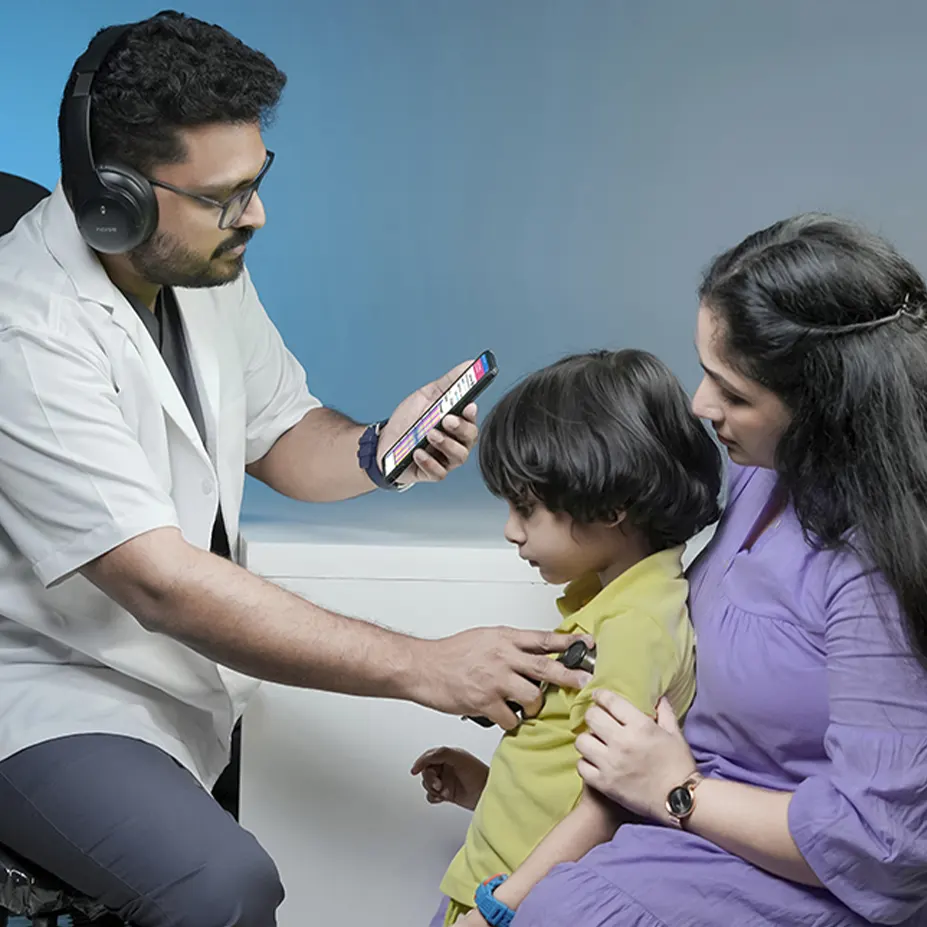
What Is a Smart Pediatric Stethoscope?
A smart pediatric stethoscope is a new-generation auscultation device designed to combine traditional medical practice with advanced digital technology. It helps pediatricians hear, visualize, record, and share what they hear, making diagnosis more accurate and accessible.
Core Features of a Smart Pediatric Stethoscope
- Sound Amplification: Boosts audio signals by up to 60x, making even faint murmurs easily detectable.
- Noise Cancellation: Filters out ambient or environmental sounds, ideal for use in noisy pediatric wards or outpatient clinics.
- Bluetooth Connectivity: Enables the stethoscope to send auscultation audio securely to paired apps on supported devices for monitoring and clinical review.
- Digital Display of Waveforms: Visualizes the sounds as waveforms, helping clinicians “see” what they hear valuable for training and review.
Distant Auscultation: Supports safe short-range auscultation (within 10 meters) using Bluetooth connectivity, enabling clinicians to listen through the companion app.
How it helps:
1. Supports pediatric comfort: Children who are anxious or fussy can remain close to their mothers, helping them stay calm during auscultation.
2. Improves care for severely injured patients: Clinicians can maintain an appropriate distance from patients with open wounds to:
a) avoid strong odors, and
b) to uphold hygiene standards.
3. Reduces exposure to infectious diseases: Distance can be maintained when examining patients with conditions such as tuberculosis.
4. Enhances safety during pandemics: Allows safer assessment of patients during outbreaks like COVID-19 or other airborne diseases.
App Integration: Works with applications that record auscultation sounds, generate reports with phonograms, and support peer review sharing or EMR integration.
With these advancements, digital pediatric stethoscopes not only enhance diagnostic precision but also empower pediatricians to collaborate and educate more effectively.
Advantages of a Digital Stethoscope for Pediatrics
1. Easier Maneuvering During Exams
Traditional stethoscopes with long tubing can get tangled or be cumbersome when dealing with active children. A wireless or Bluetooth-enabled stethoscope is compact, light, and much easier to handle especially during quick examinations.
2. Bluetooth Streaming
Through Bluetooth, smart stethoscopes can deliver auscultation audio to their companion app, enabling clinicians to adjust filters and amplification for easier identification of heart and lung sounds.
3. Enhanced Learning and Documentation
With the ability to record and visualize auscultation sounds, doctors can save cases for training pediatric residents or educating parents. For instance, showing parents the difference between a healthy heartbeat and an abnormal murmur builds understanding and trust.
4. Data Recording for Follow-ups
Recording capabilities allow doctors to store and compare a child’s heart or lung sounds across visits, helping track disease progression or treatment effectiveness. This feature is especially useful for chronic conditions like congenital heart defects or asthma.
Clearer pediatric auscultation begins with smarter sound filtering.
Special Features That Benefit Pediatric Use
Pediatric stethoscopes need to be tailored to the specific challenges of working with children. Here are features that make smart pediatric stethoscopes particularly effective:
- Advanced Filters: Designed to suppress irrelevant noise like crying, movement, or background chatter while isolating relevant pediatric heart and lung frequencies.
- Compact Design: Small, pocket-friendly form factors that make them easy to carry and handle during examinations.
These features collectively make digital pediatric stethoscope more efficient, comfortable, and reliable for daily use.
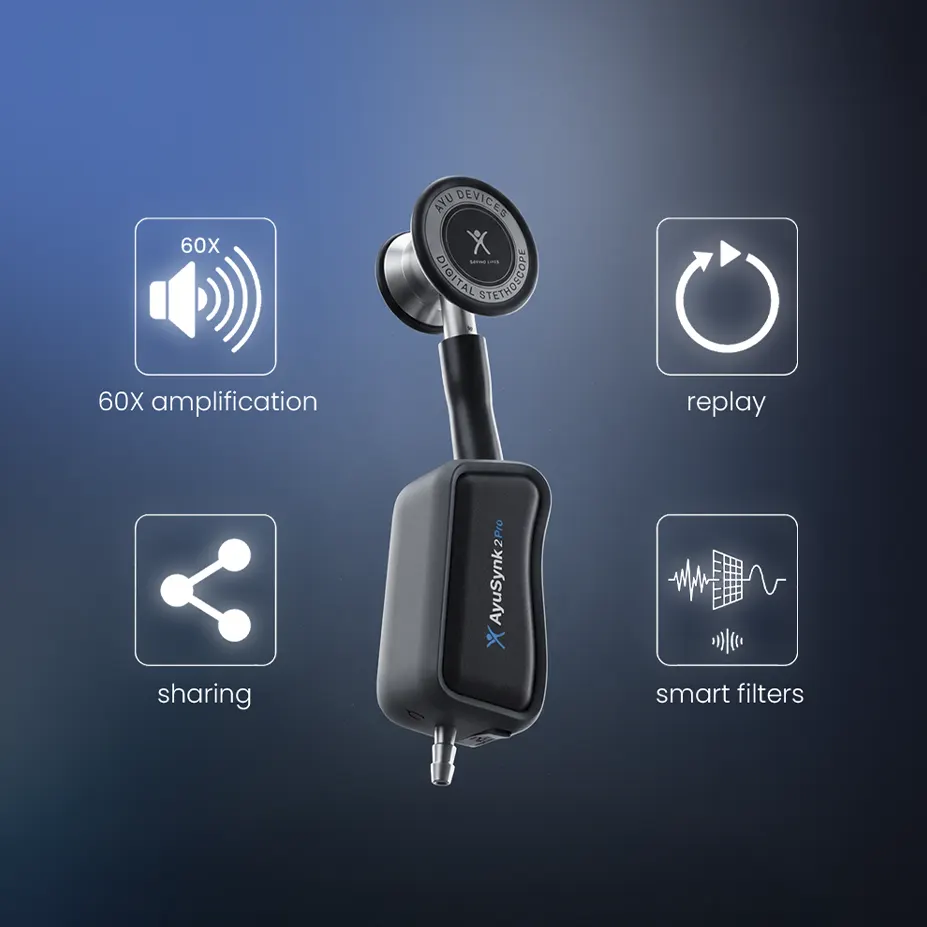
AyuSynk’s Pediatric Edge
Among the new wave of smart stethoscopes available in India, AyuSynk Digisteth stands out for its thoughtful design and India-centric innovation.
AyuSynk 2+ and 2Pro Advance
These models are specifically built for doctors and they feature:
- High-fidelity amplification (up to 60x) for accurate auscultation in infants and children.
- Digital filters that help separate heart and lung sounds even in restless or crying children.
- Integration with the AyuShare App, allowing data sharing, cloud-based recording, and waveform visualization.
- Tele-auscultation compatibility, allows real-time remote auscultation using internet connectivity and cloud storage, supporting doctors in timely clinical decision-making.
Clinician Feedback
Because parents can now see visual evidence of what is being heard, doctors employing AyuSynk devices have reported easier diagnoses, less background interference, and more parental trust. Transparency in pediatric treatment is also improved by the capacity to replay and evaluate sounds collectively.
AyuSynk’s “Digisteth” capabilities, like AI-assisted analysis and monitoring, make it a potent, locally backed choice for physicians in India and abroad.
Use Cases in Pediatric Clinics and Telemedicine
1. Outpatient Pediatric Care
In high-volume clinics, speed and accuracy matter. A pediatric stethoscope enables rapid triage and helps doctors make quick yet precise assessments. Amplified audio and noise cancellation ensure reliable results even in chaotic outpatient settings.
2. Pediatric Telemedicine
Digital pediatric stethoscopes are transforming remote healthcare. A nurse or paramedic in a rural area can capture a child’s auscultation sounds using a digital stethoscope and securely share them with a pediatric specialist, improving access to expert care.
3. Teaching Hospitals
In academic settings, recorded heart and lung sounds can be replayed for audio-visual training. Pediatric residents can learn how to identify murmurs, wheezes, or rales without needing a patient every time. The waveform visualization further enhances diagnostic learning.
Conclusion
Pediatric medicine demands patience, precision, and compassion but also the right technology. Traditional stethoscopes, though iconic, are no longer sufficient in a world where digital clarity and remote access define modern care.
Smart pediatric stethoscopes empower doctors to overcome background noise, amplify subtle sounds, record findings, and even collaborate remotely. For young patients, this means faster diagnoses, less discomfort, and greater trust.
With innovations from brands like AyuSynk, pediatricians in India can now access affordable, high-performance digital stethoscopes that align perfectly with the needs of 2026 and beyond.
If you’re a pediatrician looking to elevate your diagnostic accuracy and efficiency, it’s time to upgrade your toolkit because the future of pediatric auscultation is digital, connected, and smarter than ever.
Smart auscultation supports accurate, confident pediatric

Dr. Ankit Kadarge
Dr. Ankit Kadarge is a writer, and Clinical Product Manager in MedTech who believes healthcare should be simple and understandable for everyone. He started his journey at Oxford Medical College, Bangalore, and soon discovered a love for writing, publishing over 20 articles with MedBound to make medical knowledge accessible.
Previously he has worked at ACKO, leading the life insurance vertical as a pilot doctor, where he gained a deeper understanding of how people experience and sometimes misunderstand healthcare. Today, he builds solutions that solve real problems for doctors and patients, blending his medical knowledge with product thinking.
On his blog, Ankit shares his experiences, learnings, and reflections on healthcare always in a way that’s easy to read and relate to.