How to Use a Digital Stethoscope for Remote Patient Monitoring?

Making Remote Listening Clinically Reliable
In today’s healthcare system, remote care is expanding quickly. Patients with chronic diseases, those with limited mobility, and those who live far from hospitals frequently require ongoing clinical monitoring but are unable to make regular in-person appointments. Due to auscultation, which involves listening to heart and lung sounds, a doctor had to be physically present for decades, creating a firm diagnostic border.
That line has moved. The diagnosis may be delayed by days or weeks if a heart murmur or early lung crackle is overlooked. Those days are important for people with COPD or heart failure. Clinicians may now listen, record, visualize, and share body sounds over long distances without compromising the professional quality of the examination due to digital stethoscopes made for remote monitoring.
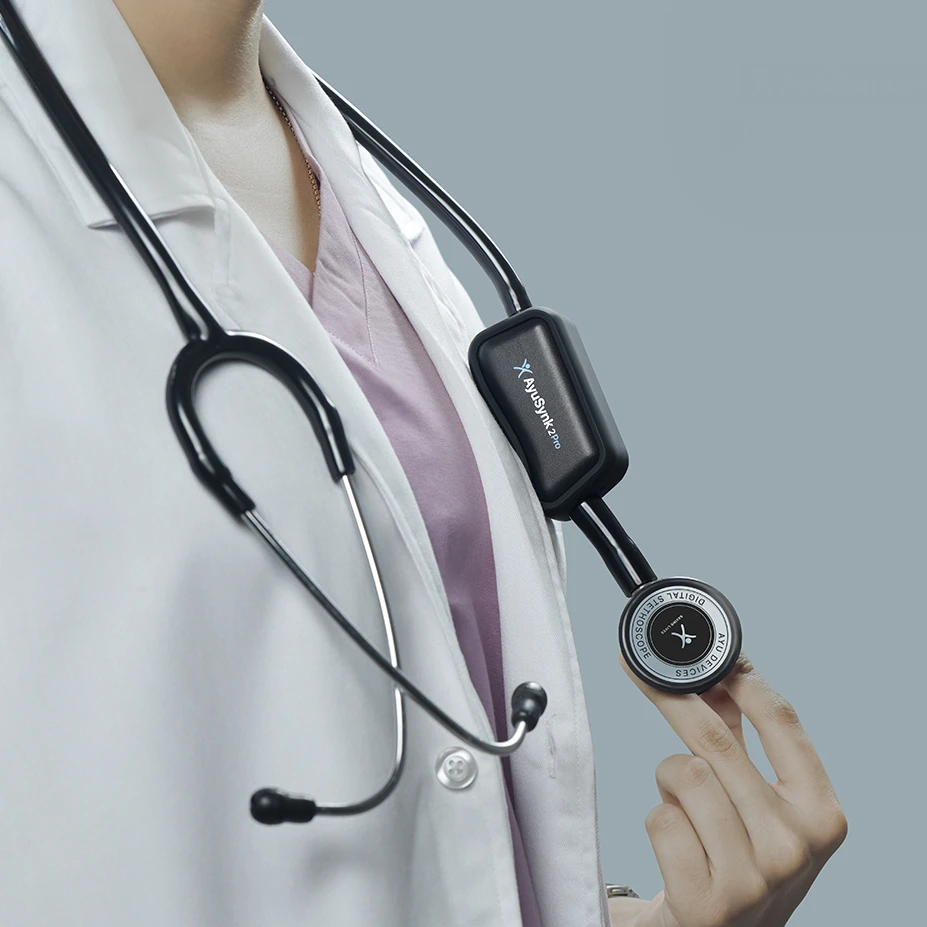
This article describes the clinical significance of remote monitoring using a digital stethoscope, when it is most useful, and how to do it step-by-step using the AyuSynk 2 Pro Lite for precise placement, sound capture, and secure data transfer.
What Is a Digital Stethoscope for Remote Monitoring?
Remote monitoring is a healthcare approach that allows doctors to monitor and assess a patient’s health condition from a different location without requiring an in-person visit. It is especially useful for patients in remote areas, individuals with chronic conditions, and situations where continuous monitoring is important. Through remote monitoring, healthcare providers can track important health data and provide timely medical support when needed.
A digital stethoscope plays a crucial role in remote monitoring by capturing heart and lung sounds with greater clarity and converting them into digital signals. These sounds can then be transmitted securely to healthcare professionals for clinical evaluation, either in real time or as recorded audio for later assessment. This helps doctors listen to and analyze a patient’s cardiac and pulmonary condition even when they are not physically present.
Since digital stethoscopes enable healthcare professionals to perform auscultation remotely, they are commonly referred to as stethoscopes for remote monitoring or tele-auscultation devices.
Unlike an acoustic stethoscope that relies entirely on the clinician’s hearing, a digital stethoscope enhances the auscultation experience through advanced electronic sound processing. It can amplify body sounds, reduce background noise, and improve the clarity of cardiac and pulmonary sounds, helping clinicians perform more accurate assessments.
One of the major advantages of digital stethoscopes is their ability to support remote monitoring and tele-auscultation. The recorded sounds can be digitally stored and securely shared with healthcare professionals for remote clinical evaluation. This makes digital stethoscopes especially useful in telemedicine, connected care environments, and situations where specialist consultation is required from a different location.
By combining sound enhancement with remote connectivity, digital stethoscopes help improve accessibility, collaboration, and efficiency in modern healthcare settings.
When Is Remote Auscultation with a Digital Stethoscope Clinically Appropriate?
Remote auscultation is not a universal replacement for in-person examination. It is, however, the right clinical tool in a well-defined range of situations:
Chronic disease follow-ups:
Patients with COPD, asthma, or heart failure require regular monitoring of cardiac and respiratory sounds to detect early signs of deterioration. Without remote auscultation, these patients either miss monitoring entirely between visits or travel unnecessarily for routine checks. Remote monitoring allows clinicians to track sound changes over time – including new wheeze, worsening crackles, or an emerging S3 – and act before symptoms escalate.
Post-discharge monitoring:
Hospital readmission rates following heart failure and COPD exacerbations remain a persistent challenge globally. A key reason is that clinical deterioration begins after discharge but is only identified when symptoms become severe enough to trigger a return visit. Remote auscultation allows the treating team to assess lung and cardiac sounds during the high-risk post-discharge window, identifying early warning signs before they become emergencies.
Consultations in isolated or rural areas:
When a cardiologist or pulmonologist is not available at a primary health centre, a trained nurse, paramedic, or health worker can perform the auscultation locally while a specialist reviews the recording remotely. This is the core workflow that makes digital stethoscopes clinically relevant in India’s Tier 2 and Tier 3 healthcare settings, where specialist density is low.
Home care or ICU step-down monitoring:
Patients transitioning from ICU-level care to a lower-acuity setting or home care environment still carry clinical risk. Periodic remote auscultation allows the treating team to maintain oversight of cardiac and pulmonary function without requiring the patient to return to a high-level facility.
Situations with limited physical access:
Elderly patients, individuals with disabilities, and those under quarantine or isolation may not be able to attend in-person appointments safely or easily. Tele-auscultation enables care continuity for these groups without compromising diagnostic quality.
Infection-sensitive environments:
During outbreaks of infectious respiratory diseases – tuberculosis, COVID-19, or seasonal respiratory infections – reducing unnecessary physical contact while maintaining examination quality is both a clinical and infection-control priority. A digital stethoscope allows clinical assessment from a safe distance.
Understanding when remote auscultation is clinically appropriate, and when in-person examination remains essential, is what allows healthcare teams to use this technology to its full benefit.
Step-by-Step Guide to Using a Digital Stethoscope for Remote Monitoring
Step 1 – Prepare the Device and Platform
Before beginning the examination, confirm that the AyuSynk 2 Pro Lite is fully charged and is powered on. Open the AyuShare app on the clinician’s smartphone or tablet and pair the device via Bluetooth, the 2 Pro Lite connects via Bluetooth for reliable, low-latency data transfer. Confirm that the app is up to date and that the recording interface is active.
If the examination is being conducted by a local health worker or caregiver while a remote clinician reviews, ensure the reviewing clinician has access to the shared cloud interface before the session begins.
Step 2 – Position the Device Correctly on the Patient
Accurate stethoscope placement is one of the most important factors in capturing clinically reliable auscultation data. Incorrect placement can produce poor or misleading recordings regardless of how advanced the device is. Whenever possible, the stethoscope should be placed directly on bare skin, as clothing can introduce friction artefacts and reduce sound clarity.
However, in certain clinical or practical situations, auscultation over light clothing may be necessary. In such cases, users should gradually adjust the device volume until physiological sounds can be heard clearly. Effective auscultation depends not on maximum volume, but on achieving the right balance between physiological sounds and background noise.
Cardiac Auscultation: Standard Anatomical Positions
Cardiac auscultation is performed at four primary valve areas on the precordium. These positions reflect where each valve’s sounds are transmitted most clearly by the direction of blood flow – they are not the exact anatomical locations of the valves themselves.
The MSD Manual describes a systematic precordial examination starting at the apical impulse, moving to the lower left sternal border, proceeding upward through each interspace, and finishing at the right upper sternal border, with additional assessment over the left axilla when clinically indicated.
The AyuShare app’s on-screen guided recording feature walks the local examiner through these positions in sequence – reducing the risk of missed sites, even when the examination is being performed by a non-specialist.
Lung Auscultation: The Stepladder Pattern Across All Lobes
Pulmonary auscultation requires systematic coverage of all lung lobes – anterior, posterior, and lateral chest fields – to avoid missing regional pathology. The standard clinical approach is a stepladder (zigzag) pattern: moving from side to side at each thoracic level before descending, which allows direct comparison between corresponding regions of the right and left lung.
For anterior auscultation, the upper lobes are assessed above the clavicles and at the 2nd–4th intercostal space, midclavicular line. The right middle lobe, which has no posterior surface, is assessed anteriorly at approximately the 4th ICS, midclavicular line. Lower lobe fields are heard anteriorly at the 6th ICS and laterally at ribs 6-8 in the mid-axillary line.
The patient should be seated upright where possible, breathing slowly through the mouth. At each position, the clinician (or the local examiner under guidance) should record at least one complete breath cycle – one full inspiration and expiration – before moving to the next site. Older adults or patients with breathlessness may need short pauses between recordings; this should be accommodated.
The number of positions will vary based on the patient’s thorax size and the clinical question being asked. For a focused follow-up in a known COPD patient, posterior basal fields may be the priority. For a new presentation with suspected pneumonia, more comprehensive anterior and posterior coverage is appropriate.
Step 3 – Capture High-Quality Auscultation Sounds
With the stethoscope positioned as optimally as possible on the patient (preferably on bare skin, when feasible), activate the recording. The AyuSynk 2 Pro Lite includes dedicated in-device filters for heart and lung sounds, along with noise cancellation to reduce ambient interference. Select the appropriate filter mode – cardiac or pulmonary – before recording each site.
Ensure the patient remains still and does not speak during the recording. For cardiac recordings, multiple cardiac cycles should be captured. For lung recordings, at least one complete breath cycle per position is the minimum. If background noise disrupts a recording, pause, allow the environment to quieten, and repeat – the AyuShare app supports multiple takes per session.
The 2 Pro Lite supports up to 100 real-time Ayu screenings per day, making it viable for high-volume OPD or community screening programs. Playback at speeds as low as 0.25x allows detailed post-recording review of sounds that may be subtle at normal speed.
Optimize patient monitoring with proper use of digital stethoscopes
Step 4 – Transmit Data to the Reviewing Clinician
Once recording is complete, the AyuShare app transmits the auscultation data from the device via Bluetooth to the connected mobile device, from where it is sent securely over the internet for remote access. The reviewing clinician can access the recordings through the shared cloud interface – listening to the audio and reviewing the visual phonocardiogram – at any time after the recording is made.
The AyuSynk 2 Pro Lite supports asynchronous sharing, meaning the examining clinician does not need to be in real-time contact with the reviewer during the session. Recordings are stored in the cloud with access controlled to authorised users, supporting patient data security. For teams requiring live tele-auscultation with real-time streaming, the AyuSynk 2 Pro Advance supports unlimited live sessions with the same sound quality and filtering capabilities.
Step 5 – Analyse and Interpret the Sounds
After recording, the AyuShare app presents processed auscultation data as a phonocardiogram (PCG) – a visual waveform that maps cardiac events including S1 (first heart sound), S2 (second heart sound), systole, and diastole in a time-aligned display. The AI classification system highlights these events, supporting the clinician in identifying whether the timing, amplitude, and character of sounds fall within normal limits or warrant further investigation.
This post-recording processing step is clinically important. Live real-time auscultation provides a useful preliminary impression, but the processed phonocardiogram – generated after the recording is complete – provides a more objective, reviewable representation of what was captured. Murmurs, arrhythmias, and abnormal breath sounds such as crackles or wheeze should be correlated with patient history, current symptoms, vital signs, and any available investigations to form a complete clinical picture.
Step 6 – Document and Store for Follow-Up
All recordings should be stored with clearly linked patient records and clinical notes describing the examination context, position sequence followed, and any immediate findings. The AyuShare platform supports cloud storage for up to 2,000 patients per year on the 2 Pro Lite plan, enabling longitudinal tracking of how a patient’s auscultation findings change over time.
For patients with chronic conditions, this longitudinal record is particularly valuable. A physician monitoring a heart failure patient can compare today’s apical recording against one from three months ago – detecting a new S3 or worsening basal crackles that would be imperceptible without a baseline reference. This structured documentation helps clinicians maintain continuity of care by providing access to patient history and previous doctor-entered notes.
Best Practices for Accurate Remote Auscultation
Consistent, reliable remote auscultation depends on both technical and clinical discipline. The following practices make a meaningful difference in data quality:
Ensure a quiet examination environment. Background noise is the most common cause of poor recordings in non-clinical settings. Even brief pauses to reduce ambient sound – switching off fans, stepping into a quieter space – significantly improve the signal-to-noise ratio.
Always place the device on bare skin. Clothing, bandages, or ECG electrodes under the chestpiece create friction artefacts. Whenever possible, place the device on bare skin, as clothing, bandages, or ECG electrodes under the chestpiece can create friction artefacts. Direct skin contact is recommended for optimal recording quality and clearer diagnostic sounds.
Follow a consistent position sequence. Using the same anatomical sequence across sessions ensures that recordings are comparable over time. The AyuShare app’s guided recording feature supports this consistency.
Train local examiners before deployment. Whether the local examiner is a nurse, community health worker, or caregiver, basic training in position identification significantly improves recording quality. This is especially important in rural outreach or home care settings.
Repeat any unclear recording. If a recording is disrupted by patient movement, sound artefacts, or ambient noise, the session should be paused and the recording repeated before moving to the next position.
Always correlate remote findings with clinical context. Auscultation data from a remote session should be interpreted alongside patient history, current symptoms, and available vital signs – not in isolation.
Common Challenges in Remote Monitoring and How to Overcome Them
Poor sound quality: Most commonly caused by incorrect placement, clothing between the device and skin, or background noise. Ensure direct skin contact, follow the guided placement sequence, and conduct recordings in the quietest available environment.
Connectivity issues: Bluetooth pairing failures or app crashes can disrupt a session. Confirm device pairing and app version before beginning the examination. For internet-based sharing, confirm that the network connection is stable before starting the session.
User error during placement: In settings where a non-clinician is performing the examination, guidance is essential. The AyuShare app’s on-screen instructions and the ability for a remote clinician to guide placement over a video call significantly reduce placement errors.
Data management across multiple patients: In high-volume settings, recordings from multiple patients can accumulate quickly. The AyuShare platform’s patient-linked cloud storage and the capacity for up to 2,000 patient records per year (2 Pro Lite plan) provides structured management of this data.
How Digital Stethoscopes Fit into Telemedicine Workflows?
A digital stethoscope functions most effectively when it is embedded into a broader telemedicine workflow . In practice, this means the examining clinician uses the AyuSynk 2 Pro Lite to capture recordings at the patient’s location, the AyuShare app transmits these recordings to the cloud, and the reviewing specialist accesses the phonocardiogram and audio from their own device to form a clinical assessment.
This workflow supports several models of connected care. In a hub-and-spoke primary care network, primary health centre nurses perform auscultations that are reviewed by a district-level physician. In a home care model, a caregiver-assisted recording is reviewed by the treating cardiologist or respiratory physician. In a teleconsultation platform, the examining physician shares recordings in real time with a specialist for a second opinion during the consultation.
The AyuSynk 2 Pro Lite’s SDK support for Android, iOS, and web platforms allows it to be integrated into existing telemedicine systems – not as an add-on, but as a connected diagnostic tool within the platform’s own interface.
Key Features to Look for in a Digital Stethoscope for Remote Monitoring
Not every digital or electronic stethoscope is suitable for remote patient monitoring. A device built for tele-auscultation needs to address the real-world conditions of remote and resource-limited environments. The AyuSynk 2 Pro Lite meets these requirements across the following dimensions:
High-fidelity amplification: Up to 60x amplification ensures that faint sounds – early murmurs, fine basal crackles, or distant wheeze – are captured with enough clarity for clinical interpretation, even in busy OPDs or rural health centres.
Dedicated in-device heart and lung filters: Separate frequency filters for cardiac (approximately 20-200 Hz) and pulmonary (100-1000 Hz) sound ranges reduce crosstalk and background noise while preserving the clinically relevant signal.
Advanced noise cancellation: Real-world examination environments are often noisy. Built-in noise suppression isolates the sound of interest from ambient interference.
Phonocardiogram visualisation via AyuShare: Post-recording, the app generates a visual phonocardiogram with AI-assisted labelling of S1, S2, systole, and diastole – adding an objective, reviewable layer to the clinical interpretation.
Secure cloud storage and sharing: Patient recordings are stored in the cloud with access restricted to authorised clinicians, supporting data privacy and continuity of care across teams.
SDK and API integration: Compatibility with existing Android, iOS, and web-based telemedicine platforms means the device integrates into current workflows rather than requiring a separate system.
Operational reliability in the field: The 2-hour charge to 8-hour battery life makes it viable for extended field sessions, health camps, and outreach programs where charging opportunities are limited.
Roles and Workflow in Remote Auscultation
Remote auscultation works best when clearly defined responsibilities are assigned across the care pathway. Depending on the care setting, the workflow may involve clinicians, trained healthcare workers, or caregivers working in coordination with a remote reviewing physician.
Clinician-led monitoring (hospital or telemedicine platforms)
In clinician-led setups, the examining physician performs auscultation using the AyuSynk 2 Pro Lite and directly records and reviews sounds within the AyuShare platform. Recordings are stored, analysed, and compared over time to support diagnosis and follow-up decisions.
Assisted examination in primary care and rural settings
In rural health centres or primary care facilities, trained nurses or community health workers perform auscultation under protocol guidance. The recorded sounds are transmitted to a district-level or specialist clinician, who provides diagnostic interpretation and treatment guidance remotely.
Caregiver-assisted home monitoring
For home-based patients, caregivers may assist in positioning the device and capturing recordings during scheduled monitoring sessions. These recordings are then shared with the treating clinician for review, enabling continuity of care without requiring frequent hospital visits.
Specialist review and longitudinal assessment
Across all models, the reviewing clinician evaluates recorded heart and lung sounds in context with patient history and prior recordings. This allows longitudinal comparison over time, supporting earlier detection of deterioration and more informed clinical decisions.
Safety, Compliance, and Data Security Considerations
Patient recordings are medical data and must be handled accordingly. The AyuShare platform transmits and stores data over a secure internet connection with access controls restricting recordings to authorised clinicians only. Hygienic care of the chestpiece between patients – standard cleaning with appropriate disinfectant – applies as it does with any stethoscope.
From a regulatory standpoint, healthcare teams using remote auscultation within telemedicine consultations should follow applicable telehealth guidelines and data protection laws in their jurisdiction. In India, this includes alignment with the Telemedicine Practice Guidelines (2020) issued by the Ministry of Health and Family Welfare, which recognise asynchronous sharing of clinical data – including recorded auscultation findings – as a legitimate component of telemedicine care.
The Future of Digital Stethoscope Remote Monitoring
The next phase of telemedicine is moving beyond basic video consultations toward diagnostic-grade remote care, where clinical examination tools such as auscultation are fully integrated into digital workflows.
Incorporating remote auscultation into telemedicine systems enables clinicians to extend physical examination capabilities beyond in-person visits. Heart and lung sound recordings can be captured at the point of care and reviewed asynchronously or in real time by specialists, improving diagnostic confidence in conditions such as heart failure, COPD, asthma, and post-operative recovery.
This approach also strengthens continuity of care by allowing clinicians to compare current and prior recordings, making subtle changes in cardiopulmonary status easier to detect over time. In distributed healthcare models such as hub-and-spoke networks, this reduces unnecessary referrals while ensuring earlier escalation when required.
For telemedicine platforms and healthcare providers, integrating digital auscultation supports a shift from symptom-based consultation to evidence-based remote examination, improving clinical decision-making without requiring additional patient visits or infrastructure expansion.
As healthcare systems scale digital-first models, tools that enable objective physiological data capture – such as heart and lung sound recordings – are becoming a key component of comprehensive virtual care delivery.
Conclusion
Digital stethoscope remote monitoring – or tele-auscultation – allows clinicians to extend the reach of one of medicine’s most fundamental examination techniques to any setting where a patient can be reached. With proper device setup, anatomically accurate placement, correct use of recording modes, and structured data sharing through a secure platform, remote auscultation can achieve diagnostic reliability comparable to in-person examination.
The AyuSynk 2 Pro Lite is built specifically for this purpose: 60x amplification, dedicated heart and lung filters, noise cancellation, phonocardiogram visualisation, and secure cloud sharing through the AyuShare app, in a device designed for the practical demands of Indian healthcare settings.
For clinicians, telehealth platforms, and healthcare networks looking to make remote patient monitoring clinically credible – not just technically possible – the right digital stethoscope is a foundational investment.
FAQs
What is the use of a digital stethoscope?
A digital stethoscope captures body sounds through electronic sensors, converts them into digital signals, and amplifies, filters, and displays them with a level of clarity and flexibility that traditional acoustic stethoscopes cannot achieve. Beyond amplification, digital stethoscopes support recording, phonocardiogram visualisation, and remote sharing – making them central tools in both in-person and telemedicine-based clinical care.
Is remote auscultation accurate?
Clinical studies, including peer-reviewed randomised controlled pilot trials, have demonstrated that remote auscultation using Bluetooth-connected electronic stethoscopes can reliably support classification of cardiac and pulmonary conditions – particularly for identifying valvular diseases, normal versus abnormal heart sounds, and respiratory findings such as wheeze and crackle. Accuracy depends on correct placement, device quality, a quiet recording environment, and correlation with clinical context.
Do digital stethoscopes require internet connectivity?
Internet connectivity is not required for basic in-person auscultation or local recording. The AyuSynk 2 Pro Lite connects to the AyuShare app via Bluetooth. Internet connectivity is required specifically for cloud storage, remote sharing of recordings with another clinician, and AI-based phonocardiogram analysis, the features that enable tele-auscultation and remote patient monitoring.
What is the difference between digital and traditional stethoscopes?
A traditional acoustic stethoscope transmits body sounds mechanically through rubber tubing to the clinician’s ears, with sound quality limited by the clinician’s hearing, ambient noise, and the acoustic properties of the tubing. A digital stethoscope converts sounds into electronic signals, enabling amplification of up to 60x, noise cancellation, dedicated frequency filtering, visual phonocardiogram display, digital recording, and secure remote sharing – none of which are possible with a conventional instrument.
Improve patient care with proper setup and digital stethoscope training

Dr. Ankit Kadarge
Dr. Ankit Kadarge is a writer, and Clinical Product Manager in MedTech who believes healthcare should be simple and understandable for everyone. He started his journey at Oxford Medical College, Bangalore, and soon discovered a love for writing, publishing over 20 articles with MedBound to make medical knowledge accessible.
Previously he has worked at ACKO, leading the life insurance vertical as a pilot doctor, where he gained a deeper understanding of how people experience and sometimes misunderstand healthcare. Today, he builds solutions that solve real problems for doctors and patients, blending his medical knowledge with product thinking.
On his blog, Ankit shares his experiences, learnings, and reflections on healthcare always in a way that’s easy to read and relate to.