Why wireless stethoscopes are the future of remote patient monitoring

Introduction
The increasing demand for ongoing patient monitoring, quicker clinical decision-making, and greater access to medical knowledge is driving the rapid development of modern healthcare. Clinicians need diagnostic tools that are adaptable, dependable, and flexible in a variety of settings as the increasing patient volumes and care is provided outside of traditional hospital boundaries.
Even though they work well in controlled environments, traditional wired diagnostic equipment frequently limits mobility and the locations and methods of patient evaluations. Noise and physical limitations can make it harder to perform effective exams in busy hospitals, ICUs, rural clinics, or during home visits.
Wireless medical devices have become a crucial component of contemporary healthcare delivery in response to these difficulties. One of the most important advancements in medicine is the wireless stethoscope, which allows for mobility, digital collaboration, and continuous patient assessment without compromising careful listening.
What Is a Wireless Stethoscope?
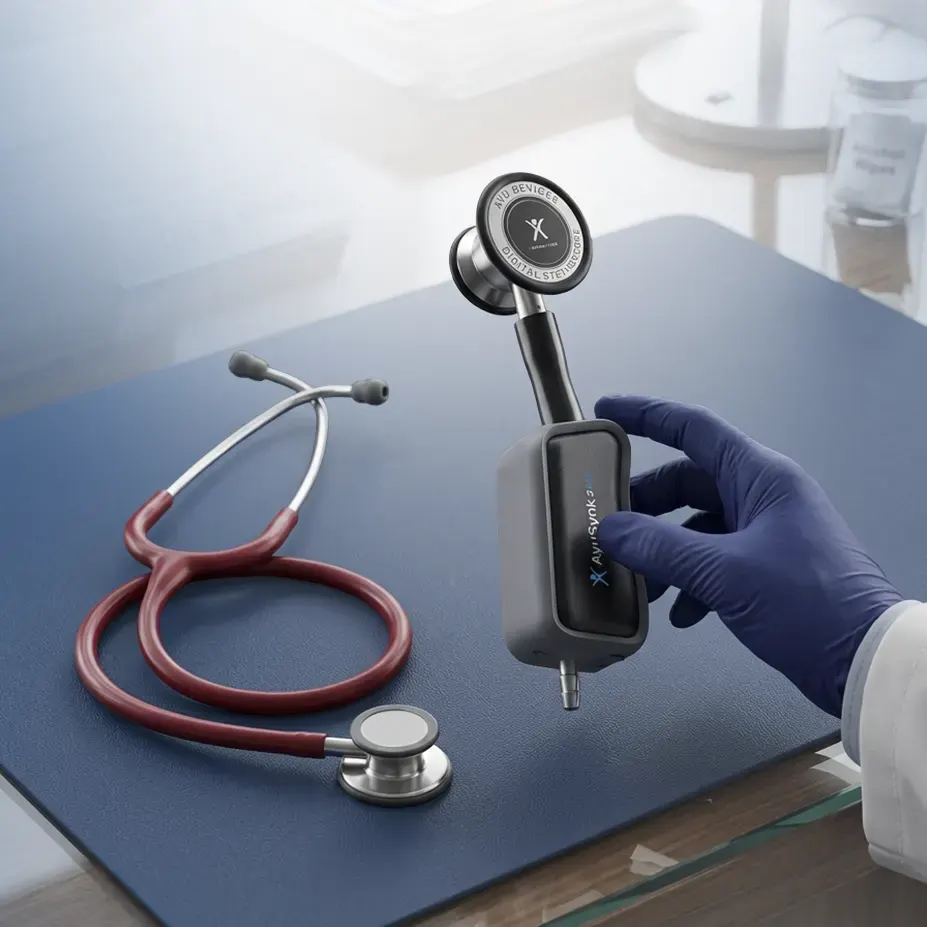
A wireless stethoscope is a sophisticated auscultation tool that transmits lung and heart sounds without the need for physical wires, giving medical professionals more flexibility when performing examinations. It essentially does the same fundamental task as a conventional stethoscope, which is to listen to internal body sounds. However, it improves this process by using wireless connectivity and signal processing.
The wireless stethoscope uses top-notch microphones to record mechanical body sounds. After being transformed into digital signals, these sounds are then amplified and sent over to a device like a tablet or smartphone. Depending on the treatment needs, the data can be safely transferred, saved for review, or listened to directly.
How Wireless Technology Improves Mobility
By removing physical wires, wireless stethoscopes allow clinicians to move freely during examinations. This is particularly beneficial in situations where multiple patients are being assessed, where protective equipment limits movement, or where clinicians need to shift quickly between bedside, workstation, and consultation areas.
For example, when examining a newborn or infant who is fussy or scared of the doctor, a wireless stethoscope can help. With the doctor’s guidance, the mother can gently place the stethoscope on the baby’s chest, while the doctor listens to the heart and lung sounds. This makes the process less stressful for the baby and allows the doctor to perform the examination safely and effectively.
Difference Between Wired and Wireless Stethoscopes
Because wired stethoscopes depend on physical connections, their location and workflow may be limited. On the other hand, wireless stethoscopes are better suited for contemporary, hectic healthcare settings since they enable flexible movement and collaborative care.
Advantages of Using a Wireless Stethoscope
Freedom of Movement During Examinations
One of the most significant advantages of a wireless stethoscope is unrestricted movement. Clinicians can listen to patients’ heart and lung sounds while staying comfortable, moving around as needed, or working with digital records at the same time. This flexibility improves efficiency and reduces physical strain during long clinical hours.
Enhanced Patient Comfort
Wireless stethoscopes contribute to a more comfortable patient experience. Without cables or rigid positioning requirements, examinations feel less intrusive. This is especially important for pediatric, elderly, or critically ill patients who may find repeated or prolonged assessments challenging and also particularly during infectious disease outbreaks or pandemic situations.
Seamless Integration With Digital Platforms
Wireless stethoscopes integrate smoothly with mobile applications and clinical platforms. In systems like AyuSynk Digisteth paired with the AyuShare App, Bluetooth is used to transmit auscultation data from the stethoscope to the clinician’s mobile device. From there, sound data can be shared over the internet either in real time or via secure links – for collaborative evaluation.
This workflow supports remote consultations and team-based care while preserving the clinician’s ability to listen and interpret sounds directly.
Use Cases in Modern Healthcare
Hospital Wards and ICUs
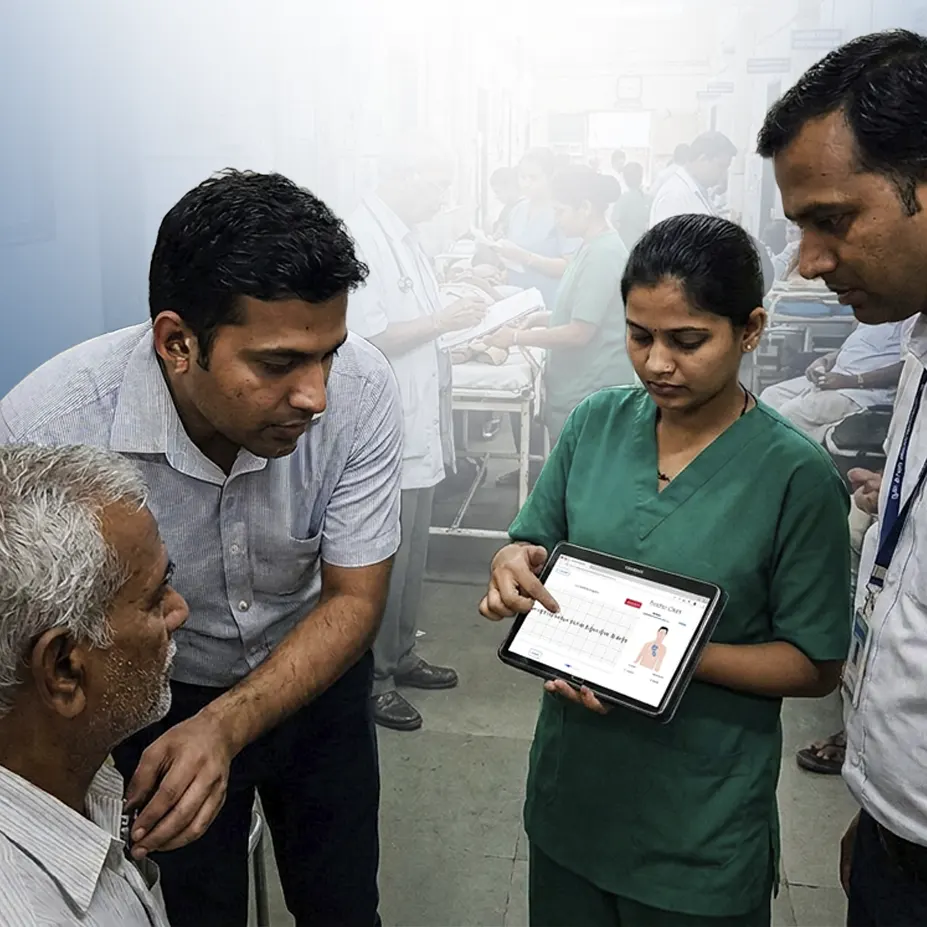
In hospital wards and intensive care units (ICUs), clinicians often need to monitor multiple patients quickly and accurately. Wireless stethoscopes allow seamless movement between beds while maintaining high-quality auscultation. Strong amplification ensures that subtle changes in heart or lung sounds are detected early, supporting timely clinical decisions.
Home-Based Patient Assessments
As home-based care grows, the AyuSynk 2+ stethoscope lets clinicians record and share auscultation sounds with specialists. This approach supports accurate diagnosis, reduces the need for patient travel, and works well in non-clinical settings, without relying on live teleauscultation.
It reads naturally, keeps the focus on home-based care, and clearly clarifies that live streaming is not available.
The AyuSynk 2+ stethoscope supports recording and sharing auscultation sounds across healthcare settings.
Medical Education and Training Environments
Wireless stethoscopes are valuable tools in medical education. In teaching settings, instructors and students can listen to the same sounds simultaneously, review recordings, and correlate auditory findings with visual waveforms. This shared learning experience strengthens auscultation skills and clinical understanding.
Key Features to Look for in a Wireless Stethoscope
Sound Amplification and Clarity
Effective wireless stethoscopes offer strong and controlled amplification, ensuring that even subtle heart murmurs or fine lung sounds are clearly audible. This is particularly important in noisy environments such as busy OPDs, rural clinics, and health camps.
For newborns, the heart beats much faster than in adults, often around 120 – 160 beats per minute. Wireless stethoscopes with good amplification and clarity help clinicians accurately capture these rapid heart sounds, ensuring that subtle variations or irregularities are not missed. This is especially useful when monitoring newborns in busy wards or during home visits.
Battery Performance and Durability
Reliable battery performance is essential for uninterrupted clinical use. A wireless stethoscope should support extended usage across multiple patient examinations without frequent recharging, ensuring dependability during long shifts.
Device Compatibility and Data Handling
Compatibility with commonly used mobile devices and operating systems is crucial. Wireless stethoscopes should integrate smoothly with applications that allow listening, visualization, saving, and secure transfer of auscultation data while maintaining patient data confidentiality.
Who Should Use a Wireless Stethoscope?
Healthcare Providers Managing Multiple Patients
Physicians, nurses, and clinicians who manage high patient volumes benefit from the efficiency and mobility offered by wireless stethoscopes. The ability to move freely and collaborate remotely helps streamline clinical workflows and enhance patient care.
Hospital Administrators Upgrading Diagnostic Infrastructure
Hospitals looking to modernize their diagnostic capabilities can benefit from adopting wireless stethoscopes as part of a broader digital transformation strategy. These tools support digital consultations and coordinated care models.
Medical Institutions Focused on Digital Transformation
Medical colleges, research institutions, and innovation-focused healthcare organizations can use wireless stethoscopes to enhance education, research, and future-ready clinical practices.
Conclusion
Wireless stethoscopes are rapidly becoming an essential component of modern healthcare. By combining high-quality auscultation with mobility, connectivity, and remote collaboration, they address many of the limitations associated with traditional wired diagnostic tools.
The long-term benefits extend beyond convenience – supporting early detection, improved clinical confidence, better patient experiences, and more efficient healthcare systems. In settings where direct contact is risky or resources are limited, wireless stethoscopes offer clinicians a safe and practical way to examine patients while maintaining high-quality care.
Adopting wireless diagnostic tools is not about replacing clinical judgment; iit is about empowering clinicians to listen better, collaborate faster, and care more effectively in an evolving healthcare landscape.
Choose wireless stethoscopes for safe, efficient examinations.

Dr. Ankit Kadarge
Dr. Ankit Kadarge is a writer, and Clinical Product Manager in MedTech who believes healthcare should be simple and understandable for everyone. He started his journey at Oxford Medical College, Bangalore, and soon discovered a love for writing, publishing over 20 articles with MedBound to make medical knowledge accessible.
Previously he has worked at ACKO, leading the life insurance vertical as a pilot doctor, where he gained a deeper understanding of how people experience and sometimes misunderstand healthcare. Today, he builds solutions that solve real problems for doctors and patients, blending his medical knowledge with product thinking.
On his blog, Ankit shares his experiences, learnings, and reflections on healthcare always in a way that’s easy to read and relate to.