How Wireless Auscultation Improves Accuracy in Cardiac and Lung Diagnosis

Introduction
The foundation of a successful cardiac and respiratory diagnosis is accurate auscultation. Clinicians can identify murmurs, irregular heartbeats, crackles, wheezes, and other subtle clinical indicators that frequently direct early diagnosis and therapy by paying close attention to heart and lung sounds. Auscultation is still a fundamental clinical skill in emergency medicine, cardiology, pulmonology, and general medicine.
Despite its significance, traditional auscultation techniques have a number of real-world drawbacks. Sound clarity and diagnostic confidence can be impacted by environmental noise, clinician hearing subjectivity, and the limitations of solely acoustic techniques. This is particularly true for clinicians working in crowded outpatient departments, intensive care units, rural health centres, or during health camps.
Traditional clinical methods are being strengthened by wireless technology as healthcare moves toward connected and collaborative models of treatment. Wireless auscultation improves how doctors listen to and understand heart and lung sounds. It also helps them communicate findings more clearly, while still supporting clinical judgment and improving diagnostic accuracy.
What Is Wireless Auscultation?
Wireless auscultation refers to listening to heart and lung sounds using a stethoscope that sends the data to a connected device, such as a smartphone, tablet, or computer. The objective is to improve physicians’ ability to listen effectively and consistently, especially in difficult situations, rather than what they listen to.
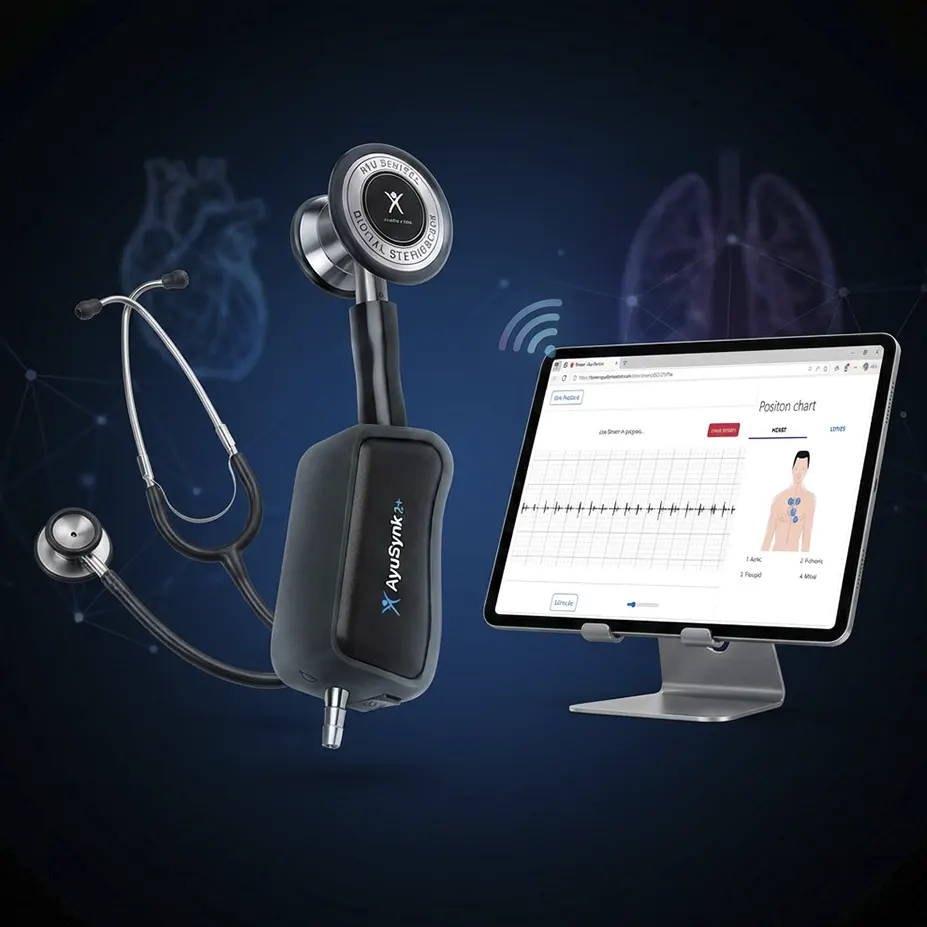
Wireless auscultation combines high-quality microphones, speakers, processors, bluetooth connectivity, and a battery to improve sound clarity, in contrast to conventional stethoscopes that only use sound transmission. After being captured and stored, body sounds are transformed into digital signals that may be safely transferred, analyzed, amplified, and displayed.
How It Differs From Traditional Auscultation
The clinician’s hearing and the surrounding environment are one of the factors that affect traditional auscultation. Amplification, noise filtering, visualization, and communication are additional levels of support that wireless auscultation offers, but the doctor has complete control over interpretation and judgment.
Role of Sound Processing in Wireless Auscultation
Digital signal processing helps enhance clinically relevant sounds and reduce background sound or noise when the stethoscope turns mechanical sounds into digital signals. This makes it possible for medical professionals to hear heart and lung sounds more reliably and clearly, especially when handling mild or early-stage abnormalities.
Limitations of Conventional Cardiac and Lung Auscultation
Difficulty Detecting Subtle Abnormal Sounds
Many cardiac and respiratory conditions present with very subtle acoustic signs. Early murmurs, faint crackles, or low-grade wheezes can be difficult to detect using conventional stethoscopes, especially in less-than-ideal listening conditions.
Environmental Noise Interference
Busy OPDs, emergency rooms, general ward, and rural clinics are rarely quiet. Background noise can easily mask important clinical sounds, increasing the risk of missed or delayed diagnosis when using purely acoustic tools.
Variability in Clinician Hearing Ability
Hearing sensitivity vary between clinicians and can change over time due to fatigue, age, or prolonged exposure to noise. This natural variability can affect auscultation consistency, particularly when multiple clinicians assess the same patient.
Conventional stethoscopes have challenges detecting subtle sounds.
How Wireless Auscultation Enhances Diagnostic Accuracy
Improved Sound Amplification and Clarity
Wireless auscultation systems offer strong and controlled amplification, ensuring that even faint heart and lung sounds are captured clearly. This is especially important when recordings are made in non-clinical environments such as rural health centers, busy OPDs, and outreach health camps.
Clearer sound directly translates to better diagnostic confidence and more informed clinical decisions.
Visual Analysis of Heart and Lung Sounds
In addition to listening, wireless auscultation often provides visual representations such as waveforms or frequency patterns. These visuals help clinicians correlate auditory findings with visual data, strengthening interpretation and reducing uncertainty in borderline cases.
Visual analysis is also valuable for documentation, follow-up comparisons, and collaborative case discussions.
Consistency in Sound Interpretation
By reducing dependence on environmental conditions and individual hearing variability, wireless auscultation promotes greater consistency in sound interpretation. Clinicians can listen multiple times, compare recordings, and seek second opinions, leading to more reliable diagnoses.
Clinical Impact on Cardiology and Pulmonology
Better Identification of Murmurs and Crackles
In cardiology, wireless stethoscopes help doctors hear heart murmurs, irregular rhythms, and subtle valve sounds more clearly. In pulmonology, it enhances identification of fine crackles, wheezes, and diminished breath sounds that may indicate early or evolving pathology.
Support in Early Diagnosis
Early detection is critical in both cardiac and respiratory care. Wireless auscultation improves the likelihood of identifying abnormalities at an earlier stage, allowing timely intervention and better patient outcomes.
Enhanced Documentation for Case Reviews
Wireless auscultation enables clinicians to save auscultation findings. These recorded sounds support monitoring, case reviews, teaching discussions, and collaborative consultations without repeating examinations unnecessarily.
Ideal Users of Wireless Auscultation Technology
Cardiologists
Cardiologists benefit from enhanced clarity, visual support, and the ability to document and review heart sounds over time. Wireless auscultation also supports collaboration with referring physicians and remote specialists.
Pulmonologists
Pulmonologists can use wireless auscultation to better assess lung sounds in complex respiratory cases, monitor disease progression, and support diagnosis in noisy or non-traditional clinical environments.
Doctors and Clinicians Supporting Remote Patient Care
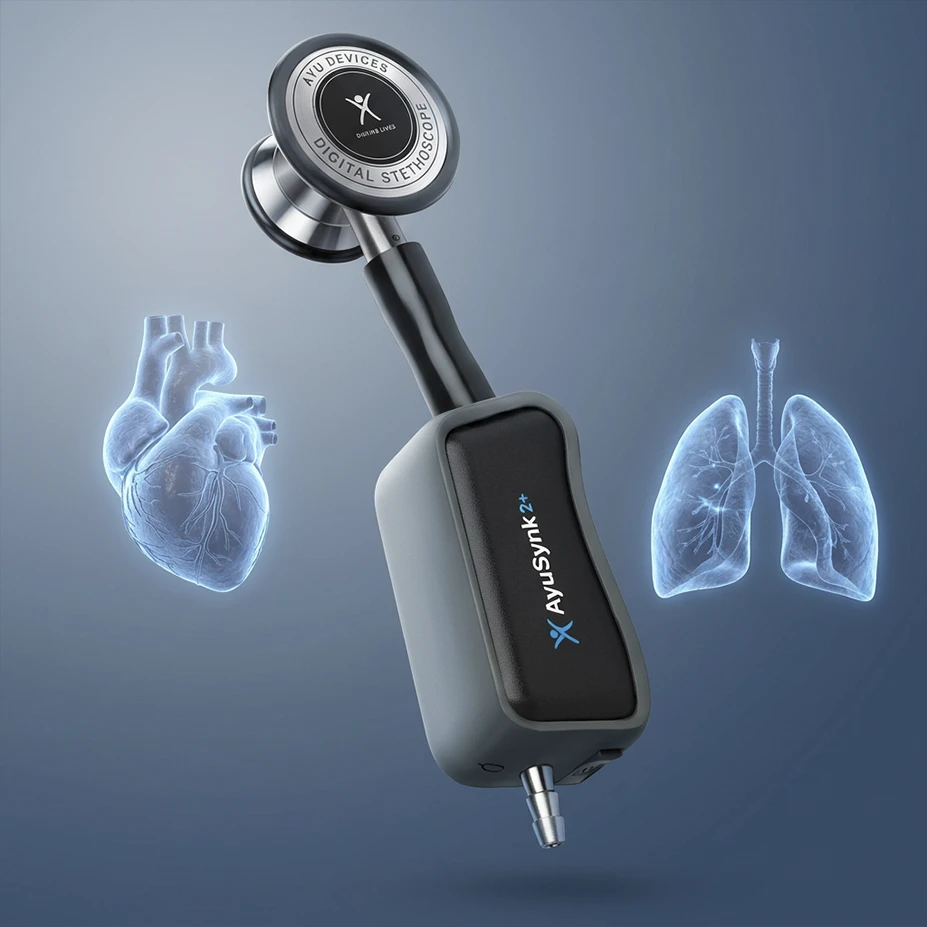
Wireless auscultation is useful when clinicians and patients are in different locations. Using solutions like AyuSynk Digisteth with the AyuShare App, auscultation data is transmitted via Bluetooth to a mobile device, and then sent securely over the internet for review.
Note: AyuSynk 2+ only supports recording and sharing of sounds, it does not provide live tele-auscultation.
Speciality Hospitals and Diagnostic Centers
Hospitals and diagnostic centers that value accuracy and teamwork benefit from using wireless stethoscopes in regular heart and lung check-ups.
Conclusion
Wireless auscultation represents a meaningful advancement in cardiac and lung diagnosis. By enhancing sound clarity, enabling visual analysis, and supporting consistent interpretation, it addresses many of the limitations associated with conventional auscultation methods.
Accuracy in cardiac and respiratory care depends on how well the doctors can listen and interpret what they hear. Wireless stethoscopes make listening to patients clearer, support better clinical documentation , and support teamwork – without replacing the doctor’s judgment.
In settings where direct contact is risky or resources are limited, these tools help doctors improve diagnostic accuracy while still relying on their clinical skills. Wireless auscultation is an important step in that direction.
Wireless stethoscopes improve accuracy while supporting clinical judgment.

Dr. Ankit Kadarge
Dr. Ankit Kadarge is a writer, and Clinical Product Manager in MedTech who believes healthcare should be simple and understandable for everyone. He started his journey at Oxford Medical College, Bangalore, and soon discovered a love for writing, publishing over 20 articles with MedBound to make medical knowledge accessible.
Previously he has worked at ACKO, leading the life insurance vertical as a pilot doctor, where he gained a deeper understanding of how people experience and sometimes misunderstand healthcare. Today, he builds solutions that solve real problems for doctors and patients, blending his medical knowledge with product thinking.
On his blog, Ankit shares his experiences, learnings, and reflections on healthcare always in a way that’s easy to read and relate to.