How Wireless Stethoscopes are reducing Diagnostic Errors in Busy Hospitals

Introduction
With hospitals seeing more patients than ever, the chances of missing subtle heart or lung sounds can rise – especially in noisy, fast-paced environments where traditional stethoscopes may struggle. Wireless stethoscopes are helping to change that. With features that improve clarity and amplification of body sounds, reduce external noise, and enable advanced sound processing, they give clinicians the confidence to make accurate diagnoses, even in the busiest settings.
In this blog, we’ll look at the challenges hospitals face and how wireless auscultation is making a real difference.
Challenges Leading to Diagnostic Errors in Busy Hospitals
In busy hospital settings, clinicians often face environmental distractions that make it difficult to hear faint heart murmurs or subtle lung sounds. Noisy wards, intensive care units, and crowded outpatient departments can increase the risk of misdiagnosis, particularly when patient volumes are high.
Time pressures and workflow demands add another layer of challenge. Doctors frequently see multiple patients at once, and each clinical assessment has a limited window. Hasty auscultation in such conditions can easily lead to errors.
Patient-related factors can also complicate accurate assessment. Young children, reluctant patients, or critically ill individuals may be difficult to examine, while others may require limited direct contact due to open wounds or infection precautions. These situations make auscultation more challenging and can increase the likelihood of diagnostic mistakes.
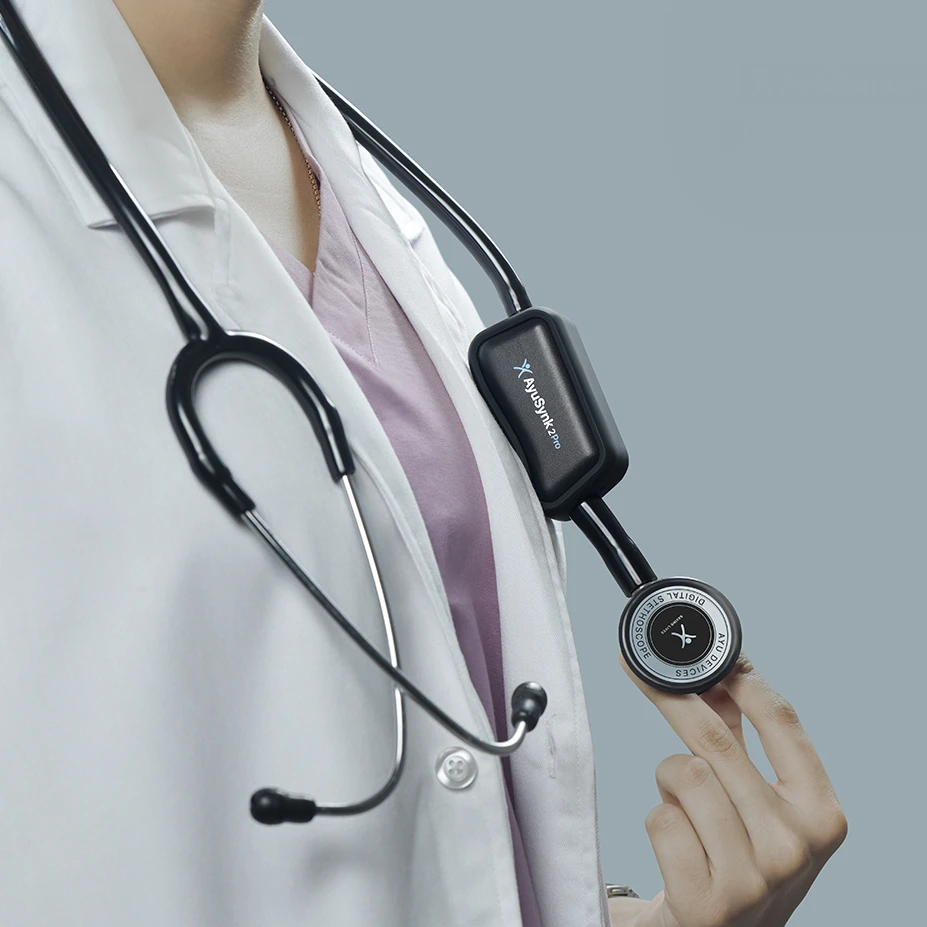
How Wireless Stethoscopes Address Diagnostic Challenges
Enhanced Sound Quality and Accurate Noise Suppression
Wireless stethoscopes use advanced noise suppression to block out background noise and enhance heart and lung sounds. This enables medical professionals to:
- Clearly hear lung sounds and faint murmurs.
- Even in crowded wards or intensive care units, make more precise assessments.
- Cut down on missed or inaccurate diagnoses.
Safe-Distance Auscultation for Patient Comfort and Clinician Safety
Medical professionals can conduct auscultation at a safe distance of up to 10 meters by using Bluetooth-enabled stethoscopes. Advantages consist of:
- Better collaboration and less patient stress
- Reduced exposure to contagious illnesses or clinically high risk medical settings
- Increased patient and clinician comfort
Recording, Post-Processing, and Phonocardiogram Generation
Modern devices allow auscultation sounds to be captured and post-processed, generating phonocardiograms that make interpretation easier. This capability supports:
- Detailed review at 0.25x slow-play for tachycardic patients
- Peer review and second opinions
- Multidisciplinary discussions for complex cases
Integration with EMRs and Digital Workflows
Captured auscultation data from wireless stethoscopes can be securely stored and integrated into hospital EMRs, which helps:
- Maintain consistent documentation.
- Support audits and longitudinal patient monitoring.
- Reduce human error by providing objective, reviewable data.
Secure recording and review enhance diagnostic confidence
Clinical Evidence Supporting Wireless Stethoscopes
Studies show that wireless stethoscopes can improve the detection of heart murmurs, arrhythmias, and subtle lung sounds. With advanced signal processing, these devices help minimize the risk of missed diagnoses, even in noisy or busy hospital environments.
Clinicians themselves report greater confidence when using wireless stethoscopes. The ability to capture and review auscultation data allows for easier comparison, reduces variability between doctors, and supports more consistent and accurate diagnoses across the board.
Use Cases in Busy Hospital Environments
High-Volume OPDs and Wards
Wireless stethoscopes help maintain accuracy even with large patient loads. Clearer sound and AI-assisted auscultation capabilities reduce errors that might arise from rushed clinical assessments.
ICUs and Critical Care Units
In intensive care, repeated close contact with unstable patients can be risky. Wireless stethoscopes allow clinicians to monitor patients safely while still obtaining accurate cardiac and pulmonary assessments.
Pediatric and Special Care Units
Children or patients needing caregiver presence benefit from wireless auscultation, which reduces stress-induced artifacts in heart and lung sounds, ensuring more reliable results.
Implementation Considerations for Hospitals
Training and Standard Operating Procedures
Clinicians need familiarity with wireless stethoscope features. Protocol-driven use ensures safe, consistent adoption and maximizes clinical benefits.
Data Security and EMR Integration
Secure storage of captured auscultation data is critical. Integration with EMRs supports audits, longitudinal tracking, and multidisciplinary review, enhancing hospital workflow.
Evaluating Technology and Vendor Options
When selecting a wireless stethoscope, hospitals should focus on:
- Clinical-grade sound quality
- Reliability and durability
- Total cost of ownership
- Features like body sound capture, external noise suppression, and reporting
Conclusion
Wireless stethoscopes are proving to be game-changers in busy hospitals, helping reduce diagnostic errors through:
- Enhanced sound quality and background noise suppression
- Safe-distance auscultation for clinician and patient safety
- Capturing mechanical body sounds and post-processing for accurate interpretation
- Integration into EMRs for documentation and audit support
For hospital decision-makers, investing in wireless stethoscopes is a strategic step toward safer, more efficient, and error-resistant diagnostics, improving outcomes for both patients and clinicians.
Investing in wireless stethoscopes strengthens hospital diagnostic safety.

Dr. Ankit Kadarge
Dr. Ankit Kadarge is a writer, and Clinical Product Manager in MedTech who believes healthcare should be simple and understandable for everyone. He started his journey at Oxford Medical College, Bangalore, and soon discovered a love for writing, publishing over 20 articles with MedBound to make medical knowledge accessible.
Previously he has worked at ACKO, leading the life insurance vertical as a pilot doctor, where he gained a deeper understanding of how people experience and sometimes misunderstand healthcare. Today, he builds solutions that solve real problems for doctors and patients, blending his medical knowledge with product thinking.
On his blog, Ankit shares his experiences, learnings, and reflections on healthcare always in a way that’s easy to read and relate to.