How AyuSynk Digisteth Solves Local Clinical Challenges in Indian Healthcare?

Introduction
The healthcare system in India has particular challenges. High patient loads, resource constraints, infrastructure deficiencies, and notable rural-urban variations in healthcare access are all challenges that doctors across the country face on a daily basis.
Doctors in overcrowded outpatient departments (OPDs) in government hospitals frequently have to assess hundreds of patients every day in a short period of time. Clinicians sometimes operate in rural and semi-urban areas with inadequate expert support and diagnostic facilities. Clinical evaluation might also be impacted by environmental factors like crowding, outside noise, and continuous workflow pressure.
Even though traditional stethoscopes are still among the most popular clinical devices, many of the current problems encountered in Indian healthcare settings weren’t designed to be solved using them.
This is where the AyuSynk Digisteth, a useful and integrated solution designed especially for Indian clinical practice, is beginning to emerge.
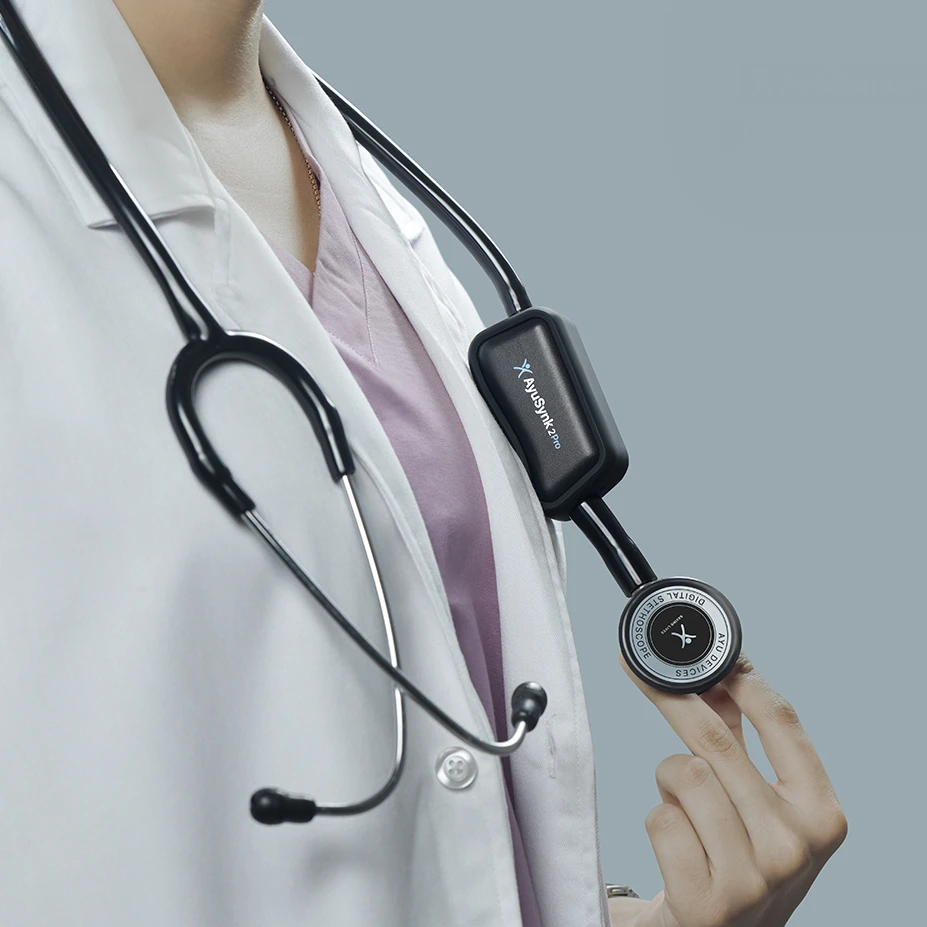
The AyuSynk Digisteth is designed as a stethoscope for Indian healthcare settings. It supports medical professionals working in outpatient departments, rural healthcare facilities, telemedicine systems, and hospitals by combining advanced sound amplification, in-device denoise technology, recording capabilities, and connected care features.
Additionally, compared to many imported medical technologies that are still unavailable in many parts of India, it offers useful features, portability, sound clarity, and ease of use at a very reasonable price.
Understanding the Unique Challenges in Indian Healthcare
India’s healthcare ecosystem is diverse and complex. Clinical requirements can vary dramatically between metropolitan hospitals and remote primary healthcare centers.
Overburdened OPDs
Large hospitals in India often experience extremely high outpatient volumes. Physicians must make quick and accurate clinical assessments while managing continuous patient flow.
Under such conditions, subtle physiological sounds may sometimes become difficult to identify using conventional acoustic tools.
Limited Access in Rural and Semi-Urban Areas
According to government healthcare reports, a significant percentage of India’s population still lives in rural regions where specialist healthcare access remains limited.
Primary healthcare providers in these settings often serve as the first and only point of contact for clinical assessment.
Diagnostic Variability Due to Infrastructure Gaps
Infrastructure differences between healthcare facilities can affect consistency in clinical evaluation.
Some healthcare centers may lack:
- Advanced diagnostic imaging
- Specialist consultation access
- Continuous monitoring systems
- Connected care infrastructure
This increases the importance of accurate bedside auscultation.
Environmental Noise and Crowded Settings
Busy OPDs, emergency departments, and healthcare camps frequently contain persistent external sounds that can interfere with clinical listening.
In crowded Indian healthcare environments, sound clarity becomes essential for accurate assessment.
Why Traditional Stethoscopes Fall Short in Indian Clinical Settings?
Conventional acoustic stethoscopes have supported generations of clinicians. However, modern Indian healthcare environments present challenges that traditional devices may not fully address.
Difficulty in Noisy Environments
Acoustic stethoscopes can struggle in crowded clinical spaces where external sounds interfere with subtle physiological sound detection.
Lack of Durability in High-Usage Scenarios
Doctors in high-volume settings use stethoscopes continuously throughout the day. Frequent handling, travel, and field visits demand a high durability stethoscope that can withstand rigorous clinical use.
No Recording or Data Tracking
Traditional devices do not support:
- Recording
- Playback
- Longitudinal tracking
- Remote sharing
- Sound visualization
This limits follow-up comparison and collaborative consultation.
Not Suited for Modern, Connected Care
Modern healthcare increasingly relies on:
- Telemedicine
- Digital health records
- Remote collaboration
- Connected diagnostics
Conventional stethoscopes cannot integrate effectively into these workflows.
AyuSynk Digisteth supports recording, filters and connectivity
What is AyuSynk Digisteth?
The AyuSynk Digisteth is a portable digital auscultation solution designed specifically to address the realities of Indian healthcare delivery.
Unlike generic digital stethoscopes built primarily for Western healthcare systems, AyuSynk devices are developed with practical Indian clinical conditions in mind.
The AyuSynk product ecosystem includes:
- AyuSynk 2+
- AyuSynk 2 Pro Lite
- AyuSynk 2 Pro Advance
Each model is designed to support different healthcare workflows ranging from routine OPD assessment to tele-auscultation and connected care.
The devices combine:
- Up to 60x sound amplification
- In-device denoise technology
- Heart and lung filters
- Recording and playback
- Visualization support
- Bluetooth-enabled connectivity
This makes the AyuSynk Digisteth highly suitable as a stethoscope for primary healthcare centers, urban hospitals, mobile healthcare teams, and telemedicine systems.
Key Features Designed for Indian Doctors
Sound Amplification and Clarity
The AyuSynk Digisteth provides up to 60x amplification, helping clinicians hear subtle physiological sounds more clearly even in challenging environments.
Noise Reduction Technology
In-device denoise technology minimizes external sounds that commonly interfere with auscultation in crowded healthcare facilities.
Recording and Playback
Clinicians can record and replay physiological sounds for:
- Follow-up comparison
- Specialist review
- Longitudinal monitoring
- Medical education
Playback at reduced speed supports better understanding of complex auscultation sounds.
Portable Design
The device is lightweight, easy to carry, and designed for practical daily clinical use across hospitals, clinics, rural outreach programs, and field visits.
How AyuSynk Digisteth Addresses Key Clinical Challenges?
Managing High Patient Load in Busy OPDs
In busy outpatient departments, clinicians often need to assess patients rapidly while maintaining diagnostic quality.
The AyuSynk Digisteth supports:
- Faster auscultation
- Improved sound clarity
- Better focus during clinical assessment
- Reduced listening fatigue
Dedicated heart and lung filters help clinicians isolate specific physiological sounds quickly during screening and clinical evaluation.
The AyuSynk 2+ is particularly suited for OPD workflows with support for real-time screening and connected care integration.
Effective Use in Rural and Primary Healthcare Centers
Rural healthcare delivery often depends heavily on portable diagnostic devices due to infrastructure limitations.
The AyuSynk Digisteth supports clinicians in low-resource settings by enabling:
- Enhanced bedside assessment
- Better outreach care
- Connected consultation
- Sound recording for specialist review
As a stethoscope for primary healthcare centers, it can improve accessibility to more advanced auscultation capabilities without requiring expensive infrastructure.
Reliable Performance in Noisy Environments
One of the most common challenges in Indian healthcare facilities is environmental sound interference.
The AyuSynk Digisteth’s denoise technology helps reduce external sounds while improving clarity of physiological sounds.
This supports:
- Better respiratory assessment
- Improved cardiac sound evaluation
- More focused clinical listening
Portability for On-the-Go Healthcare Delivery
Portable diagnostic devices are increasingly important in:
- Rural outreach programs
- Health camps
- Ambulance care
- Mobile clinics
- Home healthcare visits
The AyuSynk Digisteth is compact and practical for clinicians who frequently move between healthcare locations.
The AyuSynk 2+ is especially useful for connected care and sound sharing during field-based healthcare delivery.
Clinical Benefits for Indian Doctors and Healthcare Providers
Improved Diagnostic Accuracy
Enhanced amplification and filtering support clearer identification of physiological sounds during clinical assessment.
Time Efficiency in High-Volume Settings
Quick switching between heart and lung filters improves workflow speed in crowded OPDs.
Better Patient Monitoring and Follow-Up
Recording and playback capabilities allow clinicians to compare physiological sounds over time for longitudinal tracking.
Enhanced Confidence in Clinical Decisions
Visualization through phonocardiograms and spectrograms supports more informed clinical interpretation.
Recorded sounds become easier to analyze when AI-assisted classification helps identify S1, systole, S2, and diastole patterns more consistently.
Why is AyuSynk Digisteth the Best Stethoscope for Indian Doctors?
Several factors differentiate AyuSynk from conventional and generic digital stethoscopes.
Built for Indian Clinical Conditions
Unlike many imported systems, AyuSynk devices are designed specifically for:
- High patient load
- Crowded healthcare environments
- Rural healthcare delivery
- Connected telemedicine workflows
Better Practical Usability
The devices focus on:
- Ease of use
- Portability
- Clear sound quality
- Comfortable clinical workflow integration
Cost-Effective Access to Advanced Features
Advanced auscultation technologies often remain expensive and inaccessible across many healthcare settings in India.
The AyuSynk Digisteth provides valuable features, clarity, and recording capabilities at a highly cost-effective level, helping reduce barriers to modern diagnostic tools.
This makes it a strong candidate for the best stethoscope for Indian doctors seeking practical digital healthcare solutions.
Use Cases Across Indian Healthcare Settings
Government Hospitals
Supports faster and clearer clinical assessment in crowded OPD environments.
Private Clinics
Improves documentation, connected care, and patient tracking capabilities.
Rural Health Centers
Acts as a portable and connected stethoscope for primary healthcare centers with limited infrastructure.
Telemedicine Setups
For telemedicine kiosks, digital stethoscopes can be integrated effectively. However, for hospital-based teleconsultation, one practical challenge remains that digital stethoscopes may not always be readily available in patient homes.
Supporting India’s Shift Toward Digital Healthcare
India is rapidly moving toward digital healthcare ecosystems through:
- Telemedicine adoption
- Digital health records
- Remote consultation networks
- AI-assisted diagnostics
The AyuSynk Digisteth aligns closely with these healthcare transformation goals.
Its connected care features support:
- Tele-auscultation
- Remote collaboration
- Longitudinal monitoring
- Digital clinical workflows
As healthcare systems scale to serve larger populations, portable diagnostic devices with connected capabilities will become increasingly important.
What to Look for in a Stethoscope for Indian Healthcare?
Choosing the right stethoscope for Indian healthcare settings requires attention to practical clinical needs.
Durability
A high durability stethoscope is essential for continuous daily use across demanding healthcare environments.
Sound Clarity
Clear amplification and dedicated filters improve clinical assessment quality.
Portability
Portable diagnostic devices are especially valuable for mobile healthcare delivery and rural outreach.
Ease of Use
Clinicians require intuitive devices that fit naturally into busy workflows.
Cost-Effectiveness
Solutions should balance advanced functionality with practical affordability for large-scale healthcare adoption.
Conclusion
Indian healthcare requires diagnostic tools that can adapt to real-world clinical challenges including high patient load, crowded settings, rural accessibility gaps, and connected care demands.
The AyuSynk Digisteth addresses these realities by combining enhanced sound clarity, denoise technology, recording capabilities, portability, and connected care integration into a practical digital auscultation solution.
From government hospitals and private clinics to telemedicine networks and rural healthcare centers, AyuSynk devices help improve efficiency, clinical confidence, and accessibility to better auscultation technology.
As India continues to modernize healthcare delivery, the AyuSynk Digisteth represents a practical and future-ready upgrade for doctors seeking a smarter stethoscope for Indian healthcare environments.
FAQs
What makes a stethoscope suitable for Indian healthcare settings?
A suitable stethoscope for Indian healthcare should provide sound clarity, durability, portability, denoise support, and ease of use in high-volume and resource-variable clinical environments.
Why is AyuSynk Digisteth considered the best stethoscope for Indian doctors?
The AyuSynk Digisteth is designed specifically for Indian healthcare challenges, offering amplification, recording, connected care support, portability, and practical usability at a cost-effective level.
Can digital stethoscopes be used in primary healthcare centers?
Yes. Digital stethoscopes are highly useful in primary healthcare centers because they improve clinical assessment, portability, recording, and remote consultation capabilities.
How important is durability in a stethoscope for Indian conditions?
Durability is extremely important because clinicians in India often use stethoscopes continuously in busy healthcare settings, outreach programs, and field visits.
Are portable diagnostic devices useful in rural healthcare?
Yes. Portable diagnostic devices improve accessibility, mobility, connected care, and bedside assessment capabilities in rural and remote healthcare environments.
Smart auscultation supports accessible healthcare across India
Dr. Ankit Kadarge
Dr. Ankit Kadarge is a writer, and Clinical Product Manager in MedTech who believes healthcare should be simple and understandable for everyone. He started his journey at Oxford Medical College, Bangalore, and soon discovered a love for writing, publishing over 20 articles with MedBound to make medical knowledge accessible.
Previously he has worked at ACKO, leading the life insurance vertical as a pilot doctor, where he gained a deeper understanding of how people experience and sometimes misunderstand healthcare. Today, he builds solutions that solve real problems for doctors and patients, blending his medical knowledge with product thinking.
On his blog, Ankit shares his experiences, learnings, and reflections on healthcare always in a way that’s easy to read and relate to.