How Digital Lung Auscultation Helps in Early Detection of Respiratory Diseases?

Introduction
Globally, respiratory conditions continue to be a significant burden on healthcare systems. Hundreds of millions of people worldwide suffer from chronic respiratory conditions including asthma and Chronic Obstructive Pulmonary Disease (COPD), while lower respiratory infections continue to rank among the top causes of death, according to the World Health Organization (WHO). Because of increased air pollution, smoking, occupational exposure, and delayed access to treatment in rural areas, respiratory disorders are emerging as critical clinical priorities across India.
Reducing hospital admissions, lowering long-term treatment costs, and improving patient outcomes all depend on early identification of respiratory diseases. Many respiratory conditions, however, continue to be detected late because traditional lung auscultation is primarily reliant on physician experience and subjective interpretation.
Conventional stethoscopes have been used by medical professionals for decades to listen to physiological sounds coming from the lungs. Traditional auscultation is useful in many situations, but it is not always able to identify small abnormalities, particularly in busy clinical environments or when the disease is still in its early stages.
Digital lung auscultation is revolutionizing present respiratory care in this regard. Digital auscultation technologies are assisting doctors in identifying respiratory disorders earlier and more consistently by incorporating enhanced sound amplification, respiratory sound monitoring, and visualization tools.
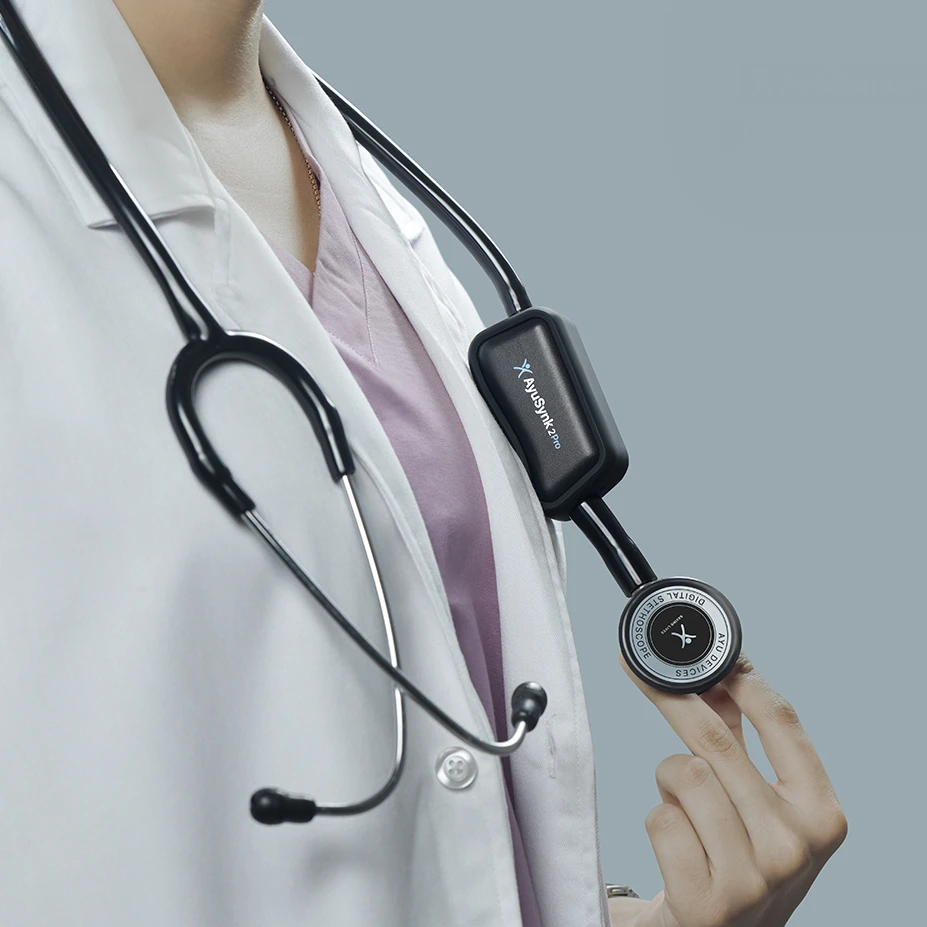
With improved sound clarity, lung sound visualization, recording functionality, and connected care integration, solutions such as the AyuSynk Digisteth are bringing advanced auscultation capabilities into routine clinical practice.
What is Digital Lung Auscultation?
Using a digital stethoscope to electronically record, process, enhance, and analyze lung sounds during a clinical evaluation is known as “digital lung auscultation.”
Digital systems convert physiological sounds into digital signals, in contrast to traditional stethoscopes that simply use acoustic transmission. After that, these signals can be recorded, shared for further analysis, amplified, filtered, and visualized.
How Does It Differ from Traditional Auscultation?
Standard auscultation is solely dependent on the clinician’s clinical experience, listening environment, and hearing ability. On the other hand, digital lung auscultation offers:
- Enhanced physiological sound amplification
- Improved external noise filtering
- Playback and recording features
- Abnormality detection
- Collaborative care through remote sharing
This facilitates more uniform clinical interpretation and greatly enhances respiratory sound monitoring.
Core Components of Digital Lung Auscultation
Modern digital auscultation systems typically include:
- Sensitive acoustic sensors
- Electronic amplification systems
- Noise reduction technology
- Dedicated lung sound filters
- Visualization software
- Data recording and sharing capabilities
Devices such as the AyuSynk 2 Pro Advance are designed to support high-quality tele-auscultation with 60x sound amplification, dedicated heart and lung filters, and sound visualization.
How Does It Work in Clinical Practice?
In a typical OPD or bedside clinical assessment, digital lung auscultation follows a streamlined workflow:
- The clinician places the digital stethoscope on standard lung auscultation points.
- Physiological sounds are captured electronically.
- Built-in amplification enhances subtle respiratory sounds.
- Dedicated lung filters isolate respiratory frequencies for better clarity.
- Sounds can be visualized as waveforms and spectrograms.
- Recordings may be stored for comparison during future visits.
- In connected care settings, recordings can be securely shared with specialists.
This combination of visualization and recording strengthens clinical assessment, especially in respiratory monitoring and longitudinal patient tracking.
Why Early Detection of Respiratory Diseases is Critical?
Many respiratory diseases develop gradually and may remain undiagnosed until symptoms become severe.
Conditions such as:
- COPD
- Asthma
- Pneumonia
- Interstitial lung disease
- Bronchitis
- Tuberculosis
often begin with subtle respiratory changes that are difficult to detect during routine assessment.
Early detection of respiratory disease can significantly improve treatment outcomes by enabling:
- Faster medical intervention
- Better symptom control
- Reduced hospitalization rates
- Lower ICU admissions
- Improved long-term quality of life
Research published in respiratory medicine journals shows that delayed diagnosis of COPD alone contributes to higher healthcare costs and increased disease progression.
In India, the challenge becomes even greater due to limited access to specialists in rural areas and overloaded urban healthcare systems. Many patients present only after symptoms worsen considerably.
Digital lung auscultation helps bridge this gap by improving detection sensitivity during routine clinical assessment.
Traditional auscultation has several notable clinical limitations
Limitations of Traditional Lung Auscultation
Although conventional stethoscopes remain essential clinical tools, they have several limitations.
Subjectivity in Listening
Auscultation is not, by birth, an innate ability; rather, it is a skill developed over time through repetitive practice. Interpretation can vary between clinicians based on experience and hearing ability.
Difficulty in Detecting Subtle Sounds
Early-stage wheezes, fine crackles, or diminished airflow may be difficult to hear clearly using standard acoustic devices.
Noise Interference in Busy Clinical Environments
External noise in emergency rooms, crowded OPDs, and ICUs can interfere with accurate respiratory assessment.
Lack of Recording or Comparison
Traditional auscultation does not allow recording or longitudinal comparison of lung sounds over time. This limits follow-up analysis and collaborative consultation.
How Digital Lung Auscultation Improves Diagnostic Accuracy?
Digital lung auscultation addresses many of these traditional limitations by combining technology with clinical expertise.
Objective Analysis vs Subjective Listening
Electronic signal processing allows more standardized respiratory sound monitoring, reducing dependence on subjective interpretation alone.
Enhanced Sound Clarity and Amplification
Devices like the AyuSynk 2 Pro Lite provide up to 60x amplification, helping clinicians hear subtle respiratory sounds more clearly during clinical assessment.
The in-device denoise feature helps minimize external sounds, improving clarity in busy healthcare settings.
Visual Waveform Support
Digital auscultation devices can display recordings supporting visual interpretation of respiratory patterns.
Recorded waveforms become easier to analyze because software tools can help identify respiratory cycles and abnormalities more consistently.
Digital systems improve abnormal breath sounds detection by enhancing faint physiological sounds and reducing external interference.
Key Benefits of Digital Lung Auscultation in Clinical Practice
Improved Respiratory Sound Monitoring
Continuous and recorded respiratory sound monitoring allows clinicians to compare changes over time and monitor disease progression more effectively.
Better Clinical Decision-Making
Enhanced clarity and visualization improve confidence during clinical assessment and treatment planning.
Early Intervention and Treatment Planning
Detecting abnormalities earlier can lead to faster initiation of therapy and reduced disease progression.
Remote Monitoring and Telemedicine Integration
Digital lung auscultation plays an increasingly important role in telemedicine.
For telemedicine kiosks, digital stethoscopes can be integrated effectively for remote respiratory assessment. However, in hospital-based teleconsultation settings, one challenge remains that digital stethoscopes may not always be readily available in patient homes.
Solutions like the AyuSynk 2 Pro Advance are specifically designed for tele-auscultation and connected care environments with real-time sound sharing capabilities.
Documentation and Longitudinal Tracking
Recorded respiratory sounds can support:
- Follow-up comparison
- Specialist referrals
- Medical education
- Patient monitoring
This is particularly useful in chronic respiratory disease management.
Use Cases Across Healthcare Settings
OPD Screening
Digital lung auscultation supports faster and clearer respiratory screening in outpatient departments.
ICU Monitoring
In critical care settings, subtle respiratory changes can be identified earlier through enhanced monitoring.
Rural and Telemedicine Applications
India’s rural healthcare system can benefit significantly from connected auscultation tools that enable remote specialists allowing Primary Health Centre (PHC) staff to stream audio directly to city consultants.
Chronic Disease Management
Patients with asthma or COPD require regular respiratory monitoring. Recorded assessments help clinicians evaluate long-term disease progression more effectively.
Digital Lung Auscultation in the Age of Connected Care
Modern systems can analyze sound signatures to identify patterns associated with respiratory diseases. The respiratory sound monitoring may support:
- Faster screening
- Risk stratification
- Early disease prediction
- Clinical decision support
Connected care ecosystems also allow integration with:
- Electronic health records
- Telemedicine systems
- Remote consultation platforms
The AyuSynk Digisteth ecosystem supports visualization, recording, and sound sharing through the AyuShare platform, helping clinicians collaborate more efficiently.
Real-World Impact: Transforming Respiratory Care
Digital lung auscultation is already improving respiratory care in practical clinical settings.
For example:
- Early crackle detection may help identify pneumonia before severe symptom escalation.
- COPD patients can be monitored longitudinally through recorded respiratory sounds.
- Physicians can compare historical recordings during follow-up visits.
This improves clinical efficiency while supporting more informed treatment planning.
What Should Physicians Look for in a Digital Lung Auscultation Solution?
Choosing the right digital auscultation solution requires careful evaluation.
Sound Quality and Amplification
High amplification with clear sound reproduction is essential.
Noise Cancellation
Reducing external sounds improves clinical accuracy in busy healthcare environments.
Ease of Use in Busy Settings
Devices should integrate smoothly into everyday clinical workflows.
Data Recording and Sharing
Recording and secure sharing support collaboration and longitudinal patient tracking.
Compatibility with Clinical Workflows
Solutions should work effectively across:
- OPDs
- Telemedicine setups
- Hospitals
- Rural healthcare systems
The AyuSynk 2 Pro Advance is particularly suited for connected respiratory care due to its tele-auscultation capabilities, visualization features, and unlimited real-time screening functionality.
Conclusion
Digital lung auscultation is redefining respiratory care by improving the accuracy, consistency, and efficiency of respiratory assessment.
By enhancing respiratory sound monitoring, enabling abnormal breath sounds detection, and supporting early detection of respiratory disease, digital auscultation technologies are helping clinicians make better-informed decisions earlier in the care pathway.
As healthcare increasingly moves toward connected care ecosystems, digital auscultation solutions like the AyuSynk Digisteth are positioned to play a major role in improving respiratory outcomes across hospitals, clinics, telemedicine networks, and rural healthcare settings.
The future of respiratory care will depend not only on listening to physiological sounds but also on understanding, visualizing, recording, and analyzing them more effectively than ever before.
FAQs
What is digital lung auscultation?
Digital lung auscultation is the use of a digital stethoscope to electronically capture, amplify, record, visualize, and analyze lung sounds during clinical assessment.
How does digital lung auscultation help in early detection of respiratory disease?
It improves sound clarity, enhances subtle physiological sounds, reduces external noise, and supports abnormal breath sounds detection, helping clinicians identify respiratory abnormalities earlier.
Can digital stethoscopes detect abnormal breath sounds more accurately?
Digital stethoscopes can improve abnormal breath sounds detection through sound amplification, filtering, recording, and visualization.
Is digital lung auscultation useful in telemedicine?
Yes. Digital lung auscultation supports tele-auscultation by enabling clinicians to record, share, and remotely assess respiratory sounds during connected care consultations.
What diseases can be identified using respiratory sound monitoring?
Respiratory sound monitoring may help support clinical assessment for conditions such as asthma, COPD, pneumonia, bronchitis, pulmonary fibrosis, and other respiratory disorders.
Digital auscultation transforms modern respiratory care outcomes

Dr. Ankit Kadarge
Dr. Ankit Kadarge is a writer, and Clinical Product Manager in MedTech who believes healthcare should be simple and understandable for everyone. He started his journey at Oxford Medical College, Bangalore, and soon discovered a love for writing, publishing over 20 articles with MedBound to make medical knowledge accessible.
Previously he has worked at ACKO, leading the life insurance vertical as a pilot doctor, where he gained a deeper understanding of how people experience and sometimes misunderstand healthcare. Today, he builds solutions that solve real problems for doctors and patients, blending his medical knowledge with product thinking.
On his blog, Ankit shares his experiences, learnings, and reflections on healthcare always in a way that’s easy to read and relate to.