How Remote Auscultation for Specialist Consultation Helps Review Sounds

During Remote Auscultation, a specialist referral usually involves the communication of symptoms, vital signs, test results. What it will not carry is the physiological sounds the referring clinician heard at the time.
Remote auscultation for specialist consultations adds those missing auscultation sounds. A digital stethoscope transmits the patient’s heart or lung sounds live to a speciality center or recorded for later review. It supports specialist assessment for the final diagnosis.
The Missing Clinical Data in Remote Referrals
A cardiologist may want to hear the timing and character of a murmur or an additional heart sound. A pulmonologist may need to compare wheeze, crackles or other respiratory sounds across chest positions. Without the original sound, the specialist largely depends upon what he hears and the case report.
A pediatric telemedicine study recorded heart sounds from 47 children for remote assessment by four cardiologists. Mean sensitivity and specificity for murmur assessment were 89.7% and 98.2%. This study data proves to be evident in the role of remote assessment. Since it is a closed study, take it as a reference point every remote assessment cannot replicate the same result due to varied environments and differences in the device used.
Live and Recorded Auscultation Support Different Needs
Remote review can happen in two practical ways:
- Live auscultation or tele-auscultation lets a specialist guide the chest-piece placement and listen across relevant sites during a remote consultation.
- Recorded auscultation supports asynchronous referrals, documentation for second opinions and later review when the specialist is not available.
A randomized pilot trial using cardiac and lung simulators found no significant difference in overall cardiac or lung auscultation scores between remote and classical auscultation. Remote identification of pleural friction rubs was lower, highlighting that remote listening has both potential and limitations.
Bring Specialist Listening Features for the Specialist Referral
Where Remote Auscultation Adds Practical Value
The strongest use cases are about giving specialists better information before deciding what should happen next.
- Second opinions and referrals: share the recorded heart or lung sound instead of relying only on a report or EMR without auscultation data.
- Rural screening: capture sounds locally while a cardiologist or pulmonologist reviews from another location.
- Multi-location collaboration: allow clinical teams to discuss the same recording when deciding whether further assessment is needed.
How AyuSynk 2 Pro Advance Fits the Workflow
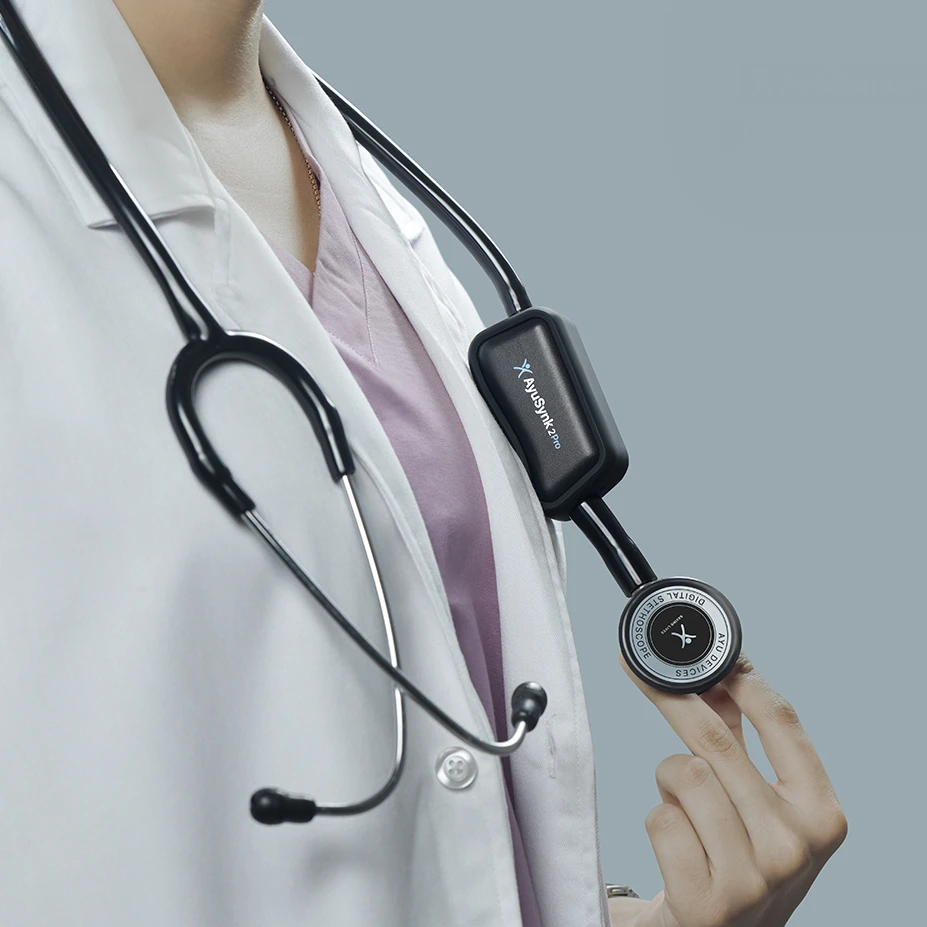
AyuSynk 2 Pro Advance is designed for tele-auscultation and real-time heart and lung sound transmission. It offers up to 60x amplification, dedicated heart and lung filters, recording, playback, sound visualisation, report generation and reduction of environmental interference.
Through the AyuShare App, clinicians can retain, replay and share auscultation information for specialist review. Correct placement, trained patient-side support and suitable connectivity remain essential for live remote use.
Bridging Rural Care with Specialist Referrals
Consider a patient at a primary care centre with an uncertain cardiac or respiratory finding. A trained care provider can position the digital stethoscope while the remote specialist guides listening or later reviews labelled recordings.
The specialist interprets the sound alongside symptoms, vital signs and other findings. If ECG, echocardiography, spirometry, imaging or in-person assessment is required, remote auscultation helps inform that next step rather than replacing it.
Good Remote Review Starts With Good Recording
Technology cannot correct an incorrectly positioned chest piece or an incomplete physical evaluation. Reliable specialist review needs clear capture, appropriate site labels and enough clinical context.
In 52 telecardiology visits involving infants with complex congenital heart disease, heart sounds and murmurs were successfully assessed in 51 visits, while comprehensive lung examination was achieved in 80%. Caregivers were trained and clinicians guided placement. Although this was a specialised pediatric program, it shows why implementation matters alongside the device.
Conclusion
Remote auscultation for specialist consultations can make cardiology and pulmonology referrals more informative by giving specialists access to the physiological sounds behind the referral. Live listening supports guided assessment, while recordings support second opinions and asynchronous review.
AyuSynk 2 Pro Advance offers tele-auscultation, recording and sharing of auscultation sounds along with phonocardiogram, waveforms and playback for a connected workflow. This helps the clinician and specialist to interpret the diagnosis based on clinical data.
Frequently Asked Questions
How does remote auscultation support a specialist consultation?
Remote auscultation gives the specialist access to the patient’s heart or lung sounds along with symptoms, vital signs and the case report. This provides additional clinical data for specialist assessment and further decision-making.
What is the difference between live and recorded remote auscultation?
Live tele-auscultation allows the specialist to guide stethoscope placement and listen during a remote consultation. Recorded auscultation allows the same sounds to be reviewed later for referrals, second opinions or follow-up discussion.
What is needed for reliable remote auscultation in a rural clinic?
A compatible digital stethoscope, correct placement by a trained care provider, clear recording of the relevant auscultation sites and appropriate clinical information are important. Live tele-auscultation also requires suitable connectivity.
How does AyuSynk 2 Pro Advance support remote specialist review?
AyuSynk 2 Pro Advance offers tele-auscultation, recording, playback and sharing of auscultation sounds for specialist review. Cardiac recordings can also be reviewed with a phonocardiogram, while waveforms provide additional visual correlation alongside the original sound.
Make Remote Referrals More Reviewable with Ayusynk Digisteth

Dr. Ankit Kadarge
Dr. Ankit Kadarge is a writer, and Clinical Product Manager in MedTech who believes healthcare should be simple and understandable for everyone. He started his journey at Oxford Medical College, Bangalore, and soon discovered a love for writing, publishing over 20 articles with MedBound to make medical knowledge accessible.
Previously he has worked at ACKO, leading the life insurance vertical as a pilot doctor, where he gained a deeper understanding of how people experience and sometimes misunderstand healthcare. Today, he builds solutions that solve real problems for doctors and patients, blending his medical knowledge with product thinking.
On his blog, Ankit shares his experiences, learnings, and reflections on healthcare always in a way that’s easy to read and relate to.