What is an E-Stethoscope? A Complete Guide for Modern Doctors

The Heartbeat of Modern Healthcare
A doctor can listen to your body’s silent sounds by placing a stethoscope on your chest, which is a very easy yet effective practice. Your heart’s rhythm, how air passes through your lungs, and even minute abnormalities can provide important information about your health.
Traditional stethoscopes have symbolized this connection between doctor and patient for many years. But just as healthcare changes, so do the devices that doctors use. These days, digital technologies are changing how medical professionals hear, understand, and respond to these vital sounds.
The e-stethoscope is useful in this situation.
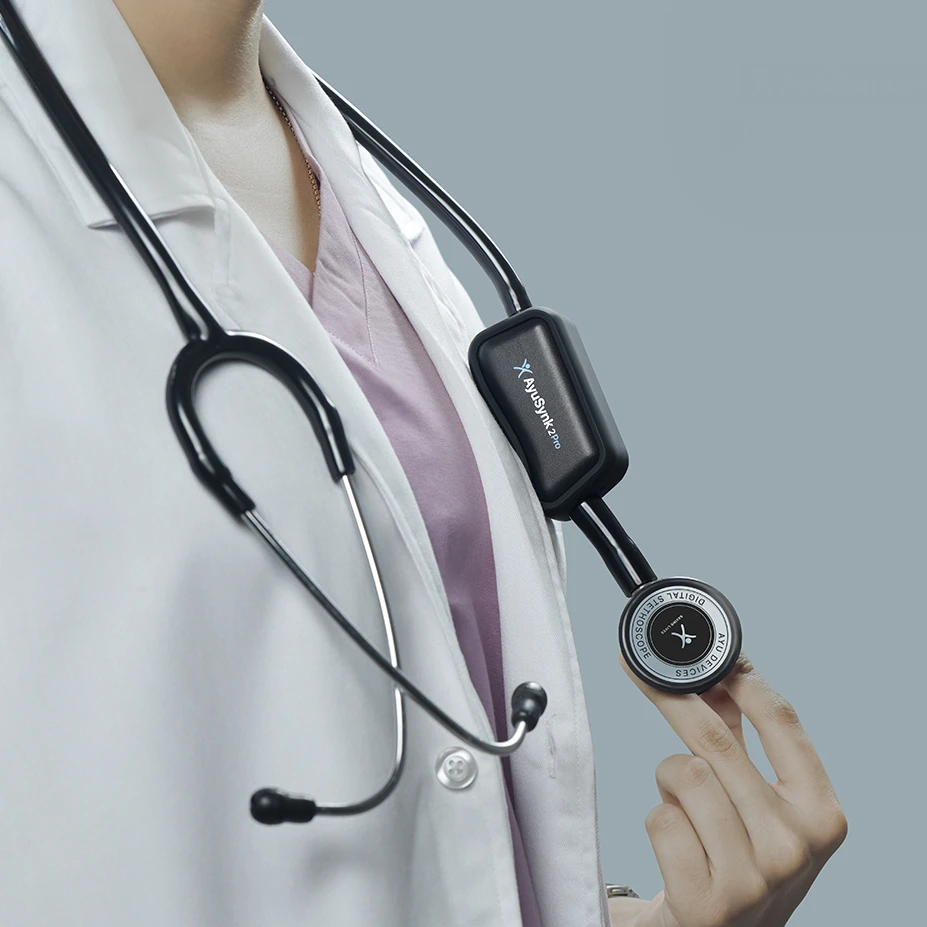
An electronic stethoscope, sometimes known as an e-stethoscope, is more than just a sound transmitter. It makes diagnosis more accurate and accessible by digitally capturing, enhancing, recording, and even sharing body sounds, particularly in current clinical settings and remote care settings.
By the time you finish reading this blog, you will know what an e-stethoscope is, how it functions, and why it is becoming a necessary tool for modern doctors.
How an E-Stethoscope Works?
The fundamental purpose of an electronic stethoscope is the same as that of a traditional acoustic: it listens to body sounds. However, it interprets such sounds in an entirely different manner.
An electronic stethoscope uses sensitive microphones or sensors to capture lung and heart sounds rather than manually transmitting sound through tubing. These sounds are then converted into digital signals.
Several improvements occur after digitization:
- Amplification: It makes faint or soft sounds more audible.
- Noise reduction: Movement and other background disturbances are reduced.
- Recording: Sounds can be stored for later review or comparison
- Visualization: Some systems generate a phonocardiogram and a spectrogram to support interpretation
In simple terms, it’s like turning a faint whisper into clear, structured audio that can be analyzed more effectively. This ability to process sound digitally is what makes the e-stethoscope especially useful in complex or noisy clinical environments.
Why Are E-Stethoscopes Important Today?
Doctors have benefited greatly from traditional stethoscopes, but in the present healthcare system, their drawbacks are becoming more noticeable.
Some typical difficulties are as follows:
- In critical and complicated situations, it might be difficult to pick up subtle sounds.
- Not being able to document or review results.
- Dependence on the clinician’s quick assessment.
- Restricted application in telemedicine or remote settings.
E-stethoscopes fill in a lot of these gaps.
For example, in a busy outpatient department (OPD) or a rural health camp, background noise can interfere with accurate auscultation. Digital amplification and filtering help ensure that critical sounds are not missed.
In telemedicine, where the doctor and patient may not be in the same location, an e-stethoscope enables sound transmission and sharing, supporting more informed remote consultations.
Consider a rural patient who needs a specialist’s opinion. Instead of travelling long distances, their heart or lung sounds can be recorded and securely shared with a specialist for evaluation. This not only saves time but also improves access to quality care.
In this way, the e-stethoscope is not just a technological upgrade; it is a response to real-world clinical challenges.
Advanced features in devices like AyuSynk 2 Pro Lite improve care
Who Can Benefit from an E-Stethoscope?
The advantages of an e-stethoscope extend across different groups in healthcare:
General Patients
Patients benefit from faster access to care, especially in remote or underserved areas. Recorded data also supports better follow-up and monitoring.
Doctors
Clinicians can hear more clearly, review findings when needed, and collaborate with peers. This can improve diagnostic confidence, especially in complex cases.
Medical Students and Learners
Students can listen to recorded cases multiple times, making it easier to understand subtle differences in heart and lung sounds. This enhances practical learning.
Telehealth Providers
For telemedicine teams, the e-stethoscope becomes a key tool in enabling remote clinical assessments and maintaining continuity of care.
Key Features That Make E-Stethoscopes Stand Out
What sets an e-stethoscope apart are the features designed to support modern clinical workflows:
Real-Time Sound Transmission
Body sounds can be transmitted instantly to connected devices, enabling immediate listening and analysis.
Amplification and External Noise Reduction
Digital processing improves clarity, making it easier to detect subtle abnormalities.
Recording and Playback
Clinicians can store and revisit auscultation data, which is useful for follow-ups, second opinions, and training.
Devices such as the AyuSynk 2 Pro Lite offer advanced playback features, including 0.25× slow-play, which can be useful for detailed analysis.
Integration with Telemedicine and EHRs
Data can be integrated into electronic medical records (EHRs), supporting documentation, and long-term tracking.
Mobile and Cloud Connectivity
Sounds can be shared securely with other clinicians, enabling collaboration across locations.
Some modern solutions, such as AyuSynk 2 Pro Lite, are designed with these capabilities in mind – offering Bluetooth-based transmission, recording features, and integration with digital platforms to support both in-clinic and remote care workflows.
Real-Life Applications
The practical use of an e-stethoscope can be seen across various healthcare settings:
Hospitals and Clinics
In wards and ICUs, clinicians can monitor patients more effectively, especially in noisy environments where clarity is essential.
Telemedicine
Specialists can listen to recorded or live sounds from patients located in different regions, supporting remote diagnosis.
Pediatric Care
Children are often more comfortable when they can stay close to their parents. Wireless auscultation reduces stress and improves cooperation.
Home Healthcare
Patients with chronic conditions can be monitored regularly without frequent hospital visits.
Emergency Response
In urgent situations, rapid recording and sharing of auscultation data can support quicker decision-making.
Comparing E-Stethoscopes and Traditional Stethoscopes
| Feature | Traditional Stethoscope | E-Stethoscope |
|---|---|---|
| Usage | Requires physical presence | Supports remote and distant use |
| Sound Clarity | Depends on environment and hearing | Enhanced with amplification and filtering |
| Recording | Not available | Supports recording and playback |
| Data Sharing | Not possible | Can be shared securely with clinicians |
| Clinical Support | Immediate interpretation only | Allows review, comparison, and collaboration |
This comparison highlights how the e-stethoscope builds on the strengths of traditional tools while addressing their limitations.
Things to Consider Before Using an E-Stethoscope
While the benefits are clear, there are a few practical considerations:
- Training: Clinicians should be familiar with device features and the interpretation of digital outputs
- Connectivity: Internet access is important for remote sharing and telemedicine use
- Device Maintenance: Regular charging and proper handling ensure consistent performance
- Data Security: Patient data must be stored and shared securely, following healthcare regulations
Keeping these factors in mind helps ensure that the technology is used effectively and responsibly.
The Future of Listening to Body Sounds
Healthcare is moving toward more connected and data-driven systems, and auscultation is evolving along with it.
Some key developments include:
AI-Assisted Auscultation
Artificial intelligence is being explored to identify patterns in heart and lung sounds, supporting early detection of conditions.
Growth of Telehealth
As remote care expands, tools like the e-stethoscope will become increasingly important in bridging the gap between patients and doctors.
Collaborative Healthcare
Digital tools allow multiple clinicians to review and discuss the same data, improving decision-making.
The future is not about replacing clinical expertise but enhancing it with better tools and insights.
Conclusion:
The e-stethoscope represents a significant step forward in how clinicians listen to and interpret body sounds. Combining traditional auscultation with digital technology, it improves clarity, enables recording, and supports remote care.
For doctors, it offers greater flexibility and confidence.
For patients, it improves access and continuity of care.
As healthcare continues to evolve, tools like the e-stethoscope are helping create a system that is not only more advanced but also more connected and accessible.
FAQs
What is an e-stethoscope?
An e-stethoscope is a digital device that captures, enhances, and transmits body sounds such as heartbeats and lung sounds for clinical use.
Can it replace traditional stethoscopes?
No, it is designed to support and enhance traditional auscultation, not replace clinical judgment or the traditional stethoscopes.
Can an electronic stethoscope be used at home?
Yes, under medical guidance, an electronic stethoscope can support home healthcare and remote monitoring.
Do recordings remain secure?
Most systems use secure platforms to store and share data, ensuring patient privacy when used correctly.
Get expert guidance on using e-stethoscopes for remote care

Dr. Ankit Kadarge
Dr. Ankit Kadarge is a writer, and Clinical Product Manager in MedTech who believes healthcare should be simple and understandable for everyone. He started his journey at Oxford Medical College, Bangalore, and soon discovered a love for writing, publishing over 20 articles with MedBound to make medical knowledge accessible.
Previously he has worked at ACKO, leading the life insurance vertical as a pilot doctor, where he gained a deeper understanding of how people experience and sometimes misunderstand healthcare. Today, he builds solutions that solve real problems for doctors and patients, blending his medical knowledge with product thinking.
On his blog, Ankit shares his experiences, learnings, and reflections on healthcare always in a way that’s easy to read and relate to.