How AI-Assisted Auscultation is Changing Early Disease Detection?

Introduction
Auscultation, the practice of listening to heart and lung sounds, has long been one of the first and most crucial steps in diagnosing cardiovascular and respiratory conditions. For centuries, clinicians have relied on traditional stethoscopes to identify murmurs, arrhythmias, or subtle lung crackles. However, human hearing has its limitations, and interpretation can vary between clinicians, leading to missed or delayed diagnoses.
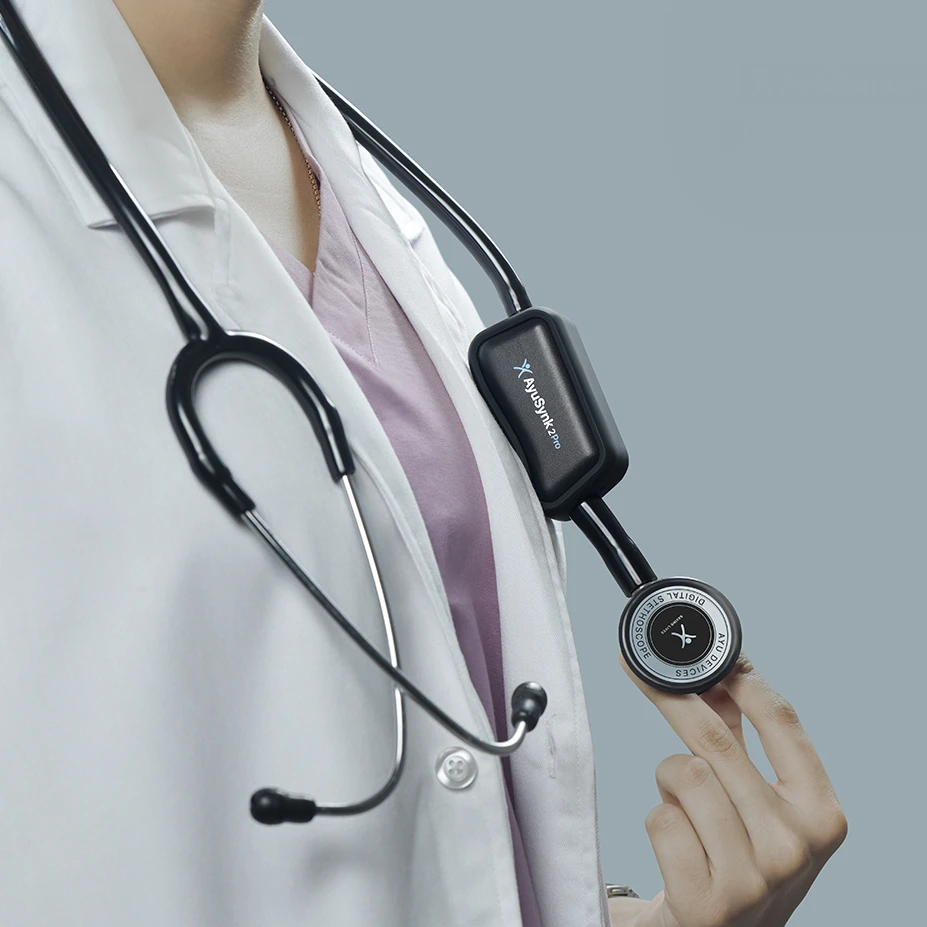
Enter AI auscultation, a revolutionary approach that combines auscultation devices with artificial intelligence to improve precision, detect subtle abnormalities earlier, and support remote healthcare. Imagine a system that can flag potential heart murmurs or early signs of lung disease before they become critical. AI is making early detection smarter and more accessible than ever.
The Science Behind AI-Assisted Auscultation
AI-assisted auscultation works by capturing heart and lung sounds with electronic stethoscopes or sensor-enabled devices. These sounds are then converted into digital signals and processed using advanced algorithms. Key steps include:
- Signal Processing and Noise Reduction: Background noise is filtered out to ensure clarity.
- Pattern Recognition: AI compares sounds against large datasets of known abnormalities.
- Predictive Analytics: AI can flag potential early-stage conditions even before they manifest clinically.
Importantly, AI auscultation is not designed to replace clinical expertise. Instead, it complements a doctor’s assessment, offering a second set of “ears” that never tire and can detect patterns that may be subtle or missed during physical evaluations.
Clinical Advantages of AI Auscultation
- Early Detection of Subtle Abnormalities:
AI auscultation can identify heart murmurs and arrhythmias that may be difficult to detect with a conventional stethoscope. - Reduction in Diagnostic Errors:
Standardized interpretation across clinicians reduces variability, providing confidence in complex or borderline cases. - Remote Monitoring Capabilities:
Tele-auscultation enables patients in rural areas or ICU settings to be monitored without constant in-person visits, expanding access to quality care. With tools like the AyuShare App, clinicians can securely receive auscultation data, track patient progress remotely, and provide timely interventions. - Time and Workflow Efficiency:
AI-powered tools can streamline OPD screening, reduce the need for repeated tests, and help prioritize patients who need urgent attention.
Use Cases Across Specialities
Cardiology
- Early detection of murmurs and arrhythmias in at-risk patients.
- Continuous monitoring of chronic heart failure patients, enabling timely intervention.
Pulmonology
- Facilitates detailed lung sound recording to aid clinician-led interpretation.
- Monitoring chronic respiratory diseases like asthma and COPD for better management.
General Practice
- Supporting GPs in triage and referral decisions.
- Integration with telemedicine platforms allows continuous patient care, even remotely.
Early detection and continuous monitoring support proactive patient care
How AI-Auscultation Tools Integrate with Modern Clinical Workflows?
For AI auscultation to be effective, it must work seamlessly within existing clinical environments. Modern devices like AyuSynk 2 Pro Advance can:
- Record and process heart and lung sounds securely.
- Transmit data to electronic health records (EHR) for real-time access by multidisciplinary teams.
- Provide alerts and reports to clinicians for timely action.
These integrations ensure that AI auscultation enhances rather than disrupts workflows, making it a practical tool for daily patient care.
Challenges and Considerations
While AI auscultation offers significant benefits, successful adoption requires careful attention to:
- Data Quality: Correct placement of the chest piece and patient cooperation are essential for accurate readings.
- Algorithm Validation: AI models must be validated across diverse populations and conditions.
- Workflow Integration: Busy clinical environments may need adjustments to incorporate AI insights efficiently.
- Regulatory and Privacy Compliance: Protecting patient data and ensuring secure handling of health information are key priorities.
The Next Frontier in AI Auscultation
The future of AI auscultation is promising. Emerging trends include:
- Integration with Other Diagnostics: Combining AI auscultation with ECG, imaging, and lab data for a comprehensive early warning system.
- Predictive Analytics: AI can provide risk scores or alerts before clinical symptoms appear.
- Continuous Learning Systems: Algorithms improve over time as they analyze more patient data.
- Patient Self-Monitoring: Under medical guidance, patients could perform regular home auscultations, with AI flagging anomalies for clinicians.
Why AI Auscultation Matters?
- AI auscultation enhances precision without replacing a physician’s judgment.
- Early detection, reduced errors, and remote care are now achievable with AI-assisted tools.
- Seamless workflow integration allows clinicians to optimize patient outcomes while saving time.
Conclusion:
AI auscultation is transforming how clinicians detect diseases early, enabling smarter, faster, and more accurate diagnoses. By empowering doctors with AI-enhanced listening tools, healthcare is becoming not only more precise but also more accessible, especially for remote and underserved populations.
Incorporating AI auscultation into clinical practice is a step toward a future where subtle signs are never missed and patient care is truly proactive. The heartbeat of modern medicine has evolved – and now, both physicians and patients stand to benefit.
FAQs
How accurate is AI auscultation compared to traditional stethoscopes?
In real-world clinical settings, AI-enabled digital stethoscopes frequently double the detection rate (Source: [Artificial-intelligence-enabled digital stethoscope improves point-of-care screening for moderate-to-severe valvular heart disease, 2026]) of moderate-to-severe valvular heart disease (VHD), making them much more accurate than traditional stethoscopes.
Other Sources: https://www.escardio.org/news/press/press-releases/ai-stethoscope/
https://www.news-medical.net/news/20260208/AI-stethoscope-doubles-detection-of-serious-valve-disease-in-primary-care-study.aspx
Can it detect conditions that are not easily audible?
Yes, AI algorithms can flag early-stage murmurs or arrhythmias before they become clinically apparent.
Is special training required to interpret AI-assisted auscultation reports?
Yes, while AI-assisted auscultation reports are designed to support faster and more informed assessments, clinical judgment remains paramount, with the AI serving as a decision-support tool..
How does AI auscultation fit into telemedicine practice?
AI auscultation is integrated into telemedicine by using digital stethoscopes to record, amplify, and digitize lung and heart sounds. AI algorithms then analyze these sounds to give clinicians real-time diagnostic support.
AI-enhanced listening tools make healthcare more precise and accessible

Dr. Ankit Kadarge
Dr. Ankit Kadarge is a writer, and Clinical Product Manager in MedTech who believes healthcare should be simple and understandable for everyone. He started his journey at Oxford Medical College, Bangalore, and soon discovered a love for writing, publishing over 20 articles with MedBound to make medical knowledge accessible.
Previously he has worked at ACKO, leading the life insurance vertical as a pilot doctor, where he gained a deeper understanding of how people experience and sometimes misunderstand healthcare. Today, he builds solutions that solve real problems for doctors and patients, blending his medical knowledge with product thinking.
On his blog, Ankit shares his experiences, learnings, and reflections on healthcare always in a way that’s easy to read and relate to.