India’s First CDSCO-Approved AI for Heart Murmur Detection: What Clinicians Need to Know

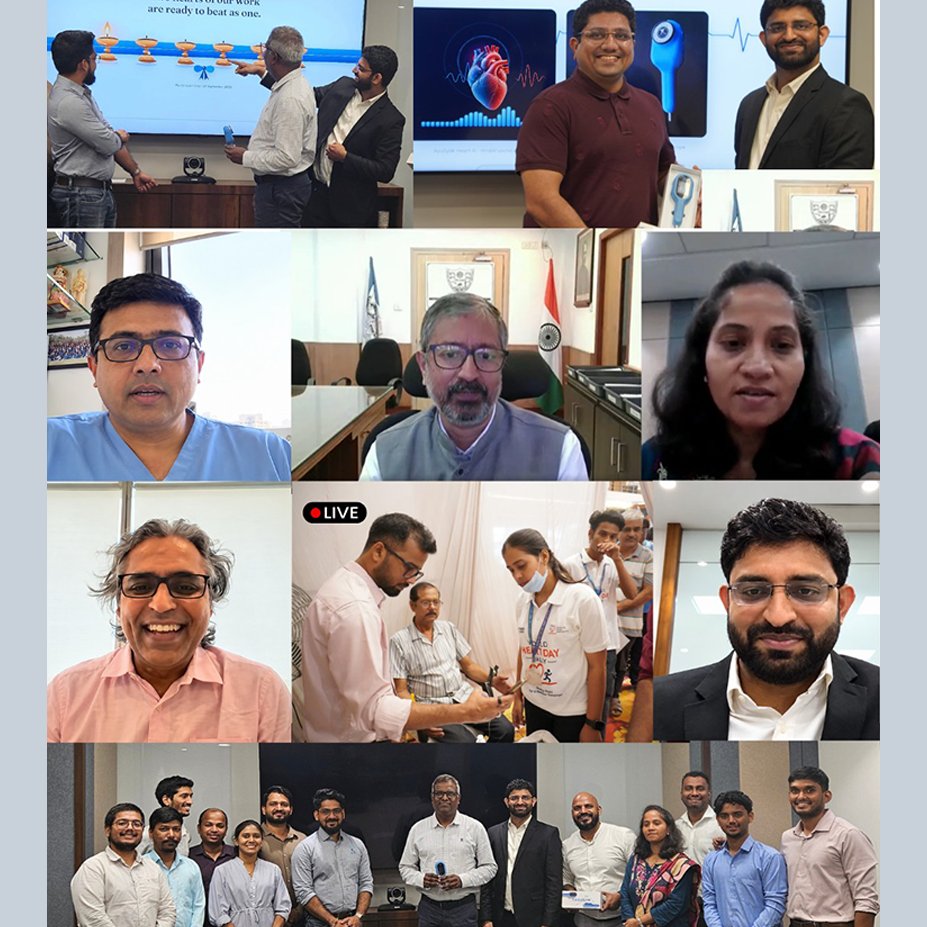
On World Heart Day 2026, we launched Heart Sound AI at SINE, IIT Bombay. It is India’s first CDSCO-approved Software as a Medical Device (SaMD) for heart murmur detection. For clinicians, this marks the entry of AI-assisted heart-sound analysis into a regulated clinical workflow.
Heart Sound AI analyses a recorded heart sound and reports murmur present or absent with a confidence level. Clinicians can use this output as an additional screening reference alongside symptoms, history, physical evaluation and other relevant findings when deciding whether further evaluation is required.
Why heart murmur screening still needs clinical context
A heart murmur is an acoustic finding that can be innocent or associated with structural cardiac disease. Its significance depends on age, symptoms, history, murmur characteristics and the rest of the clinical assessment.
A 2023 systematic review of 23 studies found wide variation in the diagnostic performance of heart auscultation for valvular disease. The practical implication is not to abandon auscultation, but to avoid interpreting it in isolation. Recording and computational review can add another reference when a finding is subtle or uncertain.
What CDSCO approval means for medical AI
In India, software intended for medical purposes can fall under the Medical Devices Rules, 2017. CDSCO oversight places medical-purpose software within an applicable medical-device regulatory framework rather than treating it as general-purpose software.
For clinicians and institutions, that matters because the software has a defined medical intended use and regulatory pathway. It does not mean the AI independently diagnoses structural heart disease or replaces echocardiography, referral or clinical judgement.
Add AI-assisted review to digital auscultation
What Heart Sound AI adds to digital auscultation
With an AyuSynk digital stethoscope, the clinician can listen to and record heart sounds through the AyuShare App. Heart Sound AI analyses the recording and provides a murmur present/absent result with a confidence level.
The workflow is straightforward:
- Auscultate and record the relevant heart sound.
- Review the AI-assisted murmur screening result.
- Correlate it with symptoms, history, Physical Evaluation and other relevant clinical findings.
- Consider further investigation or referral when indicated.
Digital auscultation already makes a heart sound replayable and shareable. Heart Sound AI adds a structured computational review to that recording, giving clinicians an additional data point to support clinically informed decisions about screening and referral.
What the Available Evidence Currently Shows
AyuSynk reports 92.86% sensitivity and 94.7% specificity for Heart Sound AI in heart murmur detection. These figures belong to this product and its validation context; they should not be generalized to other algorithms or patient populations.
During the launch, pediatric cardiologist Dr. Prashant Bobhate stated that a study involving approximately 732 patients with congenital heart disease had been conducted. He also stated that the manuscript was undergoing peer review and that a larger multicentre study was being taken forward across additional tertiary pediatric cardiac centres. This next stage matters because multicentre validation can test performance across different populations and clinical settings.
More broadly, AI-assisted auscultation research supports continued product-specific evaluation because algorithm performance depends on the system, dataset, population and recording method studied.

What a connected screening pathway can look like
The launch was accompanied by a community cardiac screening initiative in Gwalior. Heart sounds were recorded, screened with Heart Sound AI and made available for cardiologist review from another clinical location.
For a general physician or screening team, this illustrates the useful role of AI: an acoustic finding is recorded, the AI output helps direct attention, and the clinician decides whether closer assessment or referral is needed.
Where Heart Sound AI should sit in the clinical decision
A murmur-present result does not identify the underlying lesion or establish severity. A murmur-absent result should not override concerning symptoms, examination findings or other clinical information.
Heart Sound AI provides clinical decision support within digital auscultation by giving clinicians an additional screening reference to interpret alongside the complete clinical picture. Echocardiography, ECG, specialist assessment and other investigations remain appropriate when indicated.
Conclusion
The launch of CDSCO-approved Heart Sound AI marks a shift from digital recording alone to regulated AI-assisted heart murmur screening. For clinicians, the practical value is that heart sounds can be recorded, analysed, reviewed and shared, adding structured information to support clinically informed screening and referral decisions.
Frequently Asked Questions
What does Heart Sound AI report?
It analyses a recorded heart sound and reports murmur present or absent with a confidence level. It supports screening; it does not identify the underlying structural diagnosis.
Does CDSCO approval mean Heart Sound AI replaces echocardiography?
No. CDSCO approval relates to its regulated intended use as a medical device. Echocardiography and specialist evaluation remain appropriate when further investigation is clinically indicated.
What should a clinician do after a murmur is flagged?
Correlate the output with symptoms, history, Physical Evaluation and other relevant clinical findings, and murmur characteristics, then decide whether repeat assessment, echocardiography or specialist referral is indicated.
How is Heart Sound AI used with AyuSynk?
AyuSynk states that Heart Sound AI is integrated into the AyuShare App and works with its digital stethoscopes, allowing recordings and AI reports to be reviewed and shared when required.
Explore Heart Sound AI in clinical practice

Dr. Ankit Kadarge
Dr. Ankit Kadarge is a writer, and Clinical Product Manager in MedTech who believes healthcare should be simple and understandable for everyone. He started his journey at Oxford Medical College, Bangalore, and soon discovered a love for writing, publishing over 20 articles with MedBound to make medical knowledge accessible.
Previously he has worked at ACKO, leading the life insurance vertical as a pilot doctor, where he gained a deeper understanding of how people experience and sometimes misunderstand healthcare. Today, he builds solutions that solve real problems for doctors and patients, blending his medical knowledge with product thinking.
On his blog, Ankit shares his experiences, learnings, and reflections on healthcare always in a way that’s easy to read and relate to.